



Health experts have challenged governors to increase funding to public health facilities to minimise the increased maternal and newborn deaths occurring in Kenya.
Led by the Health Ministry’s division of reproductive, maternal, newborn, child and adolescent health Head, Dr Edward Serem the experts noted that women are still dying while giving life due to preventable causes while newborn survival gains have lost momentum.
Speaking during a media briefing held in Nairobi on 19th March, the experts observed: “Currently, maternal mortality ratio remains high at 355 deaths per 100,000 live births –which translates to 15 mothers dying daily or approximately 5,000 women and girls dying annually from pregnancy-related complications.
“The primary killers of mothers are post-partum haemorrhage (37 per cent of all maternal deaths); eclampsia (22 per cent) and sepsis 12 per cent),”.
At the same time, a Ministry of Health report estimates there are 21 newborn deaths for every 1,000 live births, translating to approximately 30,000 deaths annually.
“Maternal and neonatal mortality rates remain above global targets, demanding accelerated and coordinated plans that call for partnerships, collaboration and the use of data for evidence decision making,” the ministry says.
According to experts, most countries will miss Sustainable Development Goals (SDGs) targets as health financing shifts are forcing nations to rethink how to protect hard-won gains.
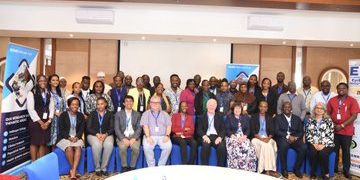
The media breakfast meeting was convened to brief journalists on the upcoming International Maternal Newborn Health Conference (IMNHC 2026), which will be taking place in Nairobi, Kenya from March 23 to 26 at the Edge convention centre.
About 1,800 delegates from more than 100 countries are expected to assemble at the conference whose theme is : “Moving forward together”.
The IMNHC (2026) is structured around four core objectives :Identify solutions; mobilise resources; build alliances and take stock.
The IMNHC is a premier global convening where stakeholders around Maternal and Newborn Health come together in a coordinated, inclusive and action-oriented way to accelerate solutions for improving maternal and newborn survival and preventing stillbirths.
IMNHC 2026 builds on the success of the inaugural conference held in 2023 in Cape Town, South Africa.
The conference aims to take stock of progress versus reality, providing a platform for countries, including Kenya, to assess gains made in expanding maternal and newborn care while acknowledging persistent gaps in quality, access, and equity.
It also seeks to identify what works and what continues to break down, highlighting proven interventions while addressing barriers to scale and implementation.
At the same time, IMNHC 2026 focuses on the politics and financing of survival, creating space to examine sustainability of MNH investments, domestic resource mobilization and accountability across national and subnational levels.
Finally, the conference aims to strengthen partnerships and alliances, ensuring that commitments translate into action beyond the event through collaboration among policymakers, practitioners, researchers and communities.
Experts say IMNHC 2026 comes at a pivotal moment in the Sustainable Development Goal (SDG) era where global progress in maternal and newborn health indicators has largely stalled and in some areas the gains made over time are reversing.
Globally, Improvements in maternal mortality have slowed significantly since 2016 and many countries are now off-track to meet their 2030 SDGs targets.
Millions of preventable maternal and newborn deaths continue to occur each year, while gains in newborn survival have also lost momentum.
At the same time, shifts in global health financing are forcing countries to rethink how to sustain and protect hard-won gains in maternal and newborn health.
Despite these challenges, countries continue to demonstrate resilience adapting, innovating and pushing forward.
According to experts, as host of IMNHC 2026, Kenya demonstrates a strong commitment to improving maternal and newborn health outcomes through policy, investment and accountability.
However, achieving national targets and global goals will require sustained political will and increased domestic funding.
Experts observe that Kenya has entered a new phase of MNH programming with stronger policy direction and increased investment.
The Government has launched the National RMNCAH+N investment case (2025) valued at Sh460 billion ($3.54 billion) with over 40 percent allocated to maternal and newborn health.
If fully implemented, this investment could save thousands of lives by 2030.
At the same time, Kenya is also rolling out the “Every Woman, Every Newborn (Ewene) strategy (2026-2030), aligned with the Sustainable Development Goals and focused on equity, quality, and accountability.
Central to this strategy are the 90/90/80/80 targets which aim to expand antenatal care, skilled birth attendance and postnatal care coverage across all counties.