






By Mike Mwaniki
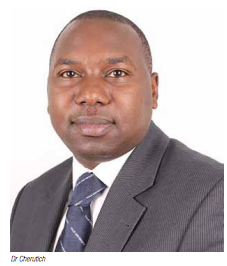
A Kenyan researcher has been honoured by the World Health Organisation (WHO) after his study findings on curbing the spread of HIV among partners was adopted by the UN body as a global policy. The study by Dr Peter Cherutich, which is dubbed Partner Notification study—enrolled 1,200 partners and was the largest study to have ever been undertaken in Africa.
It involved 12 researchers from Kenya and USA and was carried out between 2013 and 2015. Speaking to Health Business Magazine, Dr. Cherutich—who is the Health Ministry’s deputy director of medical services said the study involved calling partner (s) through telephone, of people who were tested and found to be infected with HIV.
“After introducing ourselves, we tactfully informed the sex partners of those affected that they had been exposed to HIV but we never informed them who had given us this intimate information… Those infected were promptly enrolled on ARV treatment which is safe and effective enabling them to live a ‘full life’ devoid of opportunistic infections,” Dr Cherutich noted.
Initially, there were fears by researchers before the study was undertaken that there was a likelihood of those infected by their partners to resort to violence after learning their fate but this was however, misplaced. “The desire by those exposed to know their HIV status was much stronger than seeking any kind of revenge…
In any case, those infected and gave researchers the name (s) of their sex partners remained confidential.” Dr Cherutich added: “We found the partner notification study to be safe and an important strategy in curbing the spread of HIV among sex partners in the society.” The medic said the antiretroviral treatment medicines enable the level of those infected with HIV to have undetectable viral loads as well as no opportunistic infections.
“In Kenya, those who are living with HIV but are enrolled on ARV treatment, which are safe and efficacious are more likely to die from other Non-communicable diseases (NCDs) such as diabetes or high blood pressure than Aids,” Dr Cherutich observed.
In Kenya, more women than men are living with HIV. “About 60 per cent of those who are infected by HIV are women and the best way to control the spread of HIV is for everybody—men and women to strive to know their HIV status through testing in our health facilities,” said Dr Cherutich.
He revealed that an estimated 70 per cent of those who are infected now know their status and there is need therefore to keep on increasing this number through testing. The study by Dr Cherutich was given stamp of approval by the WHO after experts looked at the methodology and evidence and found it was rigorous and met standards.
The study collaborated other findings in the USA and Malawi. Dr Cherutich says: “In December 2016, the WHO gave their approval (to the study) and issued new guidelines on the need to inform partner (s) of those infected by HIV as a global policy.”
In the WHO recommendations (2016), voluntary assisted partner notification services should be offered as part of a comprehensive package of testing and care offered to people with HIV. To achieve the United Nations (UN) 90–90–90 global HIV targets and specifically the first target of diagnosing 90 per cent of all people with HIV, the WHO has now released new guidelines.
They aim at supporting the implementation and scale-up of ethical, effective, acceptable and evidence-based approaches to assisted HIV partner notification.