



By Peter Mbachia
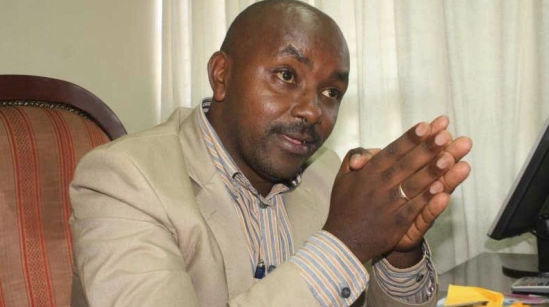
The National Cancer Institute (NCI) will soon embark on a countrywide screening programme initially focusing on breast, colon, cervical and prostate cancers in bid to reduce the increased cases of cancer which kills 28,000 people annually. Speaking to Health Business Magazine, NCI Chief Executive Dr. Alfred Karagu said a majority of people suffering from cancer in Kenya die as they seek treatment in hospitals when the disease is in the terminal stages (stage three and four).
“The Ministry of Health is concerned at the high burden of cancer in Kenya where 41,000 new cases are occurring annually. In a bid to reverse this trend, the NCI will coordinate and centralise cancer control just like we tackled HIV/Aids resulting in significant reduction of cases in the country. Early detection and access to treatment remains the key to fighting the disease,” Dr Karagu noted.
In Kenya, cancer is the third leading cause of deaths after malaria and pneumonia. The leading cancers in women are cervix uteri (40.1/100,000), breast (38.3/100,000) and oesophagus (15.1/100,000). In men, prostate (31.6/100,000), Kaposi sarcoma (16/100,000) and oesophagus (20.5/100,000) are the most common cancers.
Dr Karagu urged as many people as possible to ensure they enrolled with the National Hospital Insurance Fund (NHIF). “The NHIF has now introduced a package for cancer which enables those who have medical cover to access treatment not only in Public but also Private Hospitals. The NHIF card has reduced waiting time to access treatment,” the medic noted.
Dr Karagu said the risk factors for cancer can broadly be categorised into four types namely, behavioural risk factors that include tobacco use, harmful use of alcohol, unhealthy diet and physical inactivity. Biological risk factors include obesity, age and sex of the individual.
Environmental risk factors include exposure to environmental carcinogens such as chemicals, for example, asbestos and aflatoxins, radiation (for example, ultraviolet and ionizing radiation and infectious agents (for example certain viruses (Hepatitis B and C), HPV, EBV, HIV), bacteria and parasites and genetic factors.
According to the National Cancer Control Strategy (2017—2022), globally, five to 10 per cent of all cancers are attributed to genetic defects and 90 to 95 per cent to environmental and lifestyle factors such as cigarette smoking, diet, harmful use of alcohol and physical inactivity.
Additionally, of all cancer-related deaths, almost 25 to 30 per cent are due to tobacco, 30 to 35 per cent are linked to diet, about 15 to 20 per cent are due to infections, and the remaining percentage are due to other factors like radiation, stress, physical activity, environmental pollutants amongst others. “In low and middle income countries at least 25 per cent of cancers are also caused by infectious agents including human papilloma virus (cancer of the cervix), hepatitis B and C (cancer of the liver) and helicobacter pylori (cancer of the stomach).
“Together, these risk factors provide a significant opportunity to decrease the incidence and burden of the disease,” the strategy notes. The burden of cancer, at the macro and micro level, is huge and this is compounded by a severely limited capacity of most low-income countries to provide the necessary health care. Late stage presentation and inaccessible diagnosis and treatment are common. In 2015, for example, only 35 per cent of low-income countries reported having pathology services generally available in the public sector.
More than 90 per cent of high-income countries reported treatment services are available compared to less than 30 per cent of low-income countries. The economic impact of cancer is significant and is increasing. The economic consequences of cancer are staggering. Cancer’s toll on population health is inextricably linked to the economic impact through increased medical costs, lost income, and the financial, physical, and emotional burden placed on families and care givers.

“Under a ‘business as usual scenario, where intervention efforts remain static and rates of cancer continue to increase, as populations grow and age, cumulative economic losses to low- and middleincome countries (LMICs) are estimated at $1.5 trillion over the period 2011- 2025 (an average of $107 billion per year). The essential package of cost-effective and feasible interventions would, if fully implemented, cost an additional $20 billion per year constituting 3 per cent of total public spending on health in lowincome and middle income countries (2.6 per cent in upper middle income countries), but 13 per cent in low-income countries.
In terms of annual expenditure per capita, this amounts to $5.70, $1.70 and $1.70 annually in UMICS, lower-middle income and LICs respectively. According to Dr Karagu, in Kenya’s public hospitals, only Kenyatta National Hospital is able to offer chemotherapy, radiotherapy and surgery. The NCI, which is a semiautonomous body, plans to create awareness on cancer as well as liaise with county governments in the implementation of the cancer control programme.
“We plan to integrate all our efforts in fighting cancer through early detection through screening, mobiliseresources as well as training all health workers on treating cancer,” he said. He urged people to adopt healthy diets and avoid eating processed foods which are high in sugar and fat and low in fibre. “People should also avoid tobacco use, as 22 per cent of all cancers are linked to tobacco, avoid harmful alcohol use and living a sedentary lifestyle,” Dr Karagu noted.
He said NCI will also establish a National Cancer Registry as well as train all health workers on chemotherapy by December 2018. “We shall also monitor, evaluate and research on what we are doing by mapping specific cancers occurring inparticular areas in the country. We would also urge the society to become proactive in our churches and schools in creating awareness on cancer prevention,” added the medic.
The medic revealed that four comprehensive centres ,offering radiotherapy and chemotherapy will be established in Nyeri, Nakuru, Kisii and Mombasa to address the geographical differences on the burden of cancer. In January 2019, the Ministry of Health plans to kick-start HPV vaccination which will be integrated in the routine immunisation programme.
According to experts cancer is a generic term for large group of diseases characterised by the growth and spread of abnormal cells beyond their usual boundaries that can invade adjoining parts of the body and or spread to other organs. C a n c e r a r i s e s f r o m t h e transformation of normal cells in a multistage process that generally progresses from a pre-cancerous lesion to a malignant tumuor.
The National Cancer Control Strategy (2017-2022) says in a bid to reduce risk posed by unhealthy diets and physical inactivity, there is need to advocate for the implementation of national guidelines on diet, nutrition and physical activity. There is need to promote educational and information campaigns about reducing unhealthy diets and encourage consumption of more fruits and vegetables, fish and whole (unrefined) grains.
For childhood cancers, the strategy advocates for creation of awareness of childhood cancers including retinoblastoma, nephroblastoma, Burkitts lymphoma and Acute Lymphoblastic lymphoma and integrate into public health promotion programmes.
Others include, integrating childhood cancers into existing public health promotion programmes and also sensitising healthcare workers on clinical presentation of childhood cancers and prompt referral. Before the countrywide screening and early detection of the cancer diseases is launched, NCI with support of the American Cancer Society has started implementing the Chemo-safe Project, an initiative aimed at promoting safe handling and administration of chemotherapy, across all cancer treatment centres.
The Trainer of Trainers course cuts across all cadres involved in providing chemotherapy services from doctors, nurses and other health professionals drawn from public, private and faithbased health facilities. Dr. Karagu says NCI Kenya is hosting the training with technical assistance from an external faculty drawn from the American Cancer Society, Oncology Nursing Society of the United States and University of North Carolina.
“We want to standardise the provision of chemotherapy treatment in Kenya as we step-up the fight against cancer in this country,” he said. He added that for Kenya to make positive inroads against cancer diseases, early detection and quality treatment remains key in achieving the important goal.