


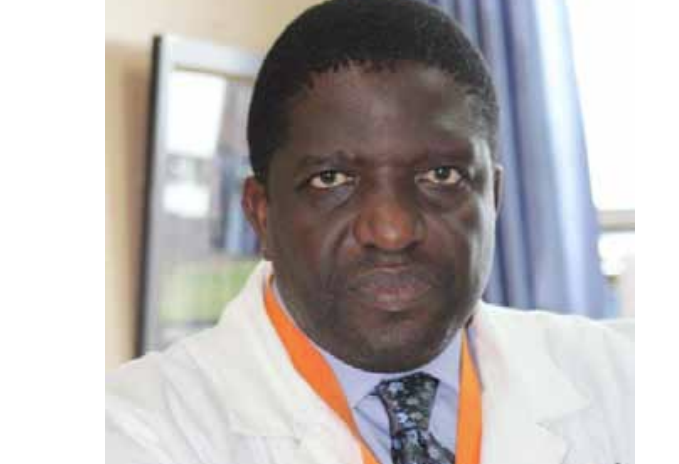
By Joseph Kabia
A leading physician and researcher says 30 percent of all post-menopausal women in Kenya are suffering from osteoporosis, calling on the government to honor its ratification of the WHO Bone and Joint Decade of 2000- 2022, through incorporating Osteoporosis in the Universal Health Coverage agenda.
Prof. George O. Oyoo, chairman of the Arthritic and Rheumatology Society of Kenya (ARSK) and Lecturer Department of Medicine, University of Nairobi said the UHC debate must include prevention of common prevalent diseases. An osteoporosis prevalence study done in a gynecological clinic by Dr. Felix Odawa, a Kenyan physician, indicates that one-third of postmenopausal women had osteoporosis, placing the country’s prevalence in osteoporosis at the same level with western countries.
The first clinical approach when someone gets a fracture is often to strengthen the bone to make sure that the body has adequate calcium. “You generally stabilize the vertebrae but in developed countries they do Kyphoplasty to support the vertebrae,” says the medic. Prof. Oyoo said there is not much option for the postmenopausal women apart from taking calcium supplement.
“They are supposed to take 1000mg/Ca per day. But if you have Calcium deficiency, you take up to 2000mg/ Ca per day,” He cautions that though calcium supplement tablets are sold over the counter, the best option is to make sure that a physician is monitoring the process because excess of it in human body can lead to soft tissue calcificationcalcium going in misappropriate places in the body.
Prof. Oyoo is especially concerned with the bone health status of the people living along the Rift Valley from Lake Turkana to the plains of Lake Naivasha. The Kenya Osteoporosis Prevention and Age Concern (OPAC), a bone health NGO, launched an International fund-raising campaign to facilitate osteoporosis research around Lake Turkana and along the Rift Valley in East Africa. WHO declared 2000-2010 as the Bone and Joint Decade, ratified by the then Minister for Health Charity Ngilu.
In her endorsement of the Bone and Joint Decade (BJD), there were suggestions that osteoporosis and Arthritis be included in the strategic plan for the Ministry of Health. WHO has now extended the Bone and Joint Decade to 2022. Prof. Oyoo contends that if the government is not able to buy DEXA machines, “it can afford to secure software’s to support osteoporosis diagnosis in the existing CT scans that are available in public hospitals.” He says that there are sufficient osteoporosis medications in the country once diagnosis has been done.
“There are the Selective Estrogen Receptor Modulators (SERMs), a class of drugs which bind to estrogen receptors and inhibit bone resorption. They increase bone mineral density in the spine, hip and total body without stimulating Prof. George O. Oyoo, Chairman, Arthritic and Rheumatology Society of Kenya Focus on Osteoporosis Focus on Osteoporosis the cells in the breast or uterus.
It has been shown to reduce an osteoporotic woman’s risk of a first fracture by 50 percent and a subsequent vertebral fracture by 30 percent” Hormone Replacement Therapies (HRT), a combination of oestrogen and progesterone that in the past was used to control vasomotor symptoms of menopause like hot flashes and mood swings, is used as a preventive therapy against osteoporosis especially in women with low bone density as it helps decrease the area of bone health.
“Bisphosphonate line of therapy, a non-hormonal treatment for the prevention of osteoporosis is also available. They increase bone density in women who have suffered one or more osteoporotic fracture and reduce the incidence of subsequent fractures.” The Calcitonins is a hormone made by the thyroid glands which reduces the risk of vertebral fractures in postmenopausal women with osteoporosis.
The drug is administered by injection or nasal spray. Calcium and Vitamin D supplements are also considered to be effective in the treatment to reduce bone loss in the elderly. Calcium alone has a limited effect as treatment for osteoporosis but when combined with vitamin D, it is very helpful component for the elderly and housebound patients who cannot obtain natural sunlight and may have poor diet. “Bone loss of ageing can be counteracted from an early age as 30 years.
The daily diet should include foods that are rich in calcium. Milk and dairy product, such as cheese, yoghurt and ice-cream are the best sources of calcium. Individuals unable to tolerate lactose (milk sugar) should take fermented milk products such as yoghurt, cheese and sour milk,” he says. He adds that it is important to get adequate amounts of vitamin D which is needed to absorb calcium from the food.
“Fifteen minutes in the sun each day will meet the daily need for this vitamin. The sun must shine directly on some parts of the skin since the ultraviolet rays necessary for the formation of vitamin D do not penetrate clothes or window glass,” he says adding that “regular moderate exercise is another important preventive measure.”