
By George Tubei
Working in Africa especially as medical personnel is never a walk in the park.
All the challenges haven’t stopped African doctors and medical personnel from doing their work or dampened their spirits, they will report to work every day in the quest to ensure they make life better for millions of Africans, sometimes needing to think on their feet and improvise quickly as medical cases unfold before their very eyes.
Here are just a few inspiring African doctors and medical personalities who left a mark in 2018.
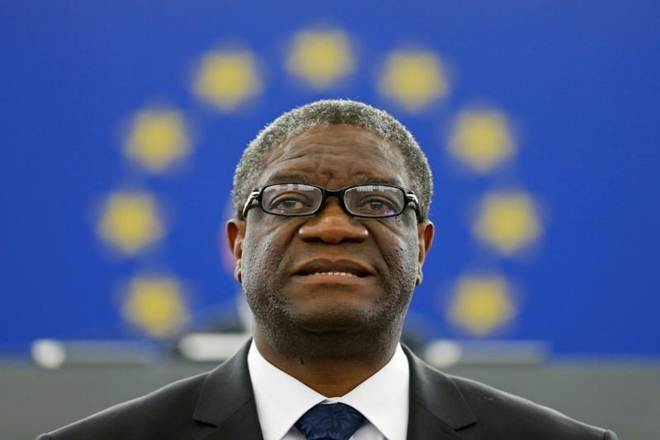
Dr. Denis Mukwege AKA ‘Doctor Miracle’
63-year-old Congolese gynaecologist, Dr. Denis Mukwege hit global headlines after he was declared the 2018 Nobel peace prize winner.
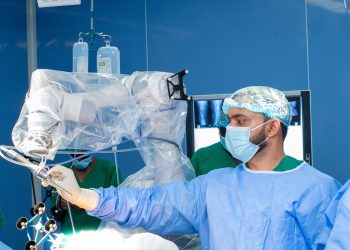
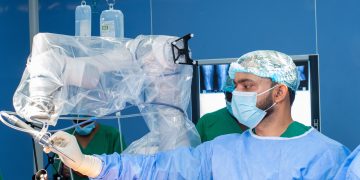
Known as ‘Doctor Miracle’ for his ability to repair through reconstructive surgery the horrific damage inflicted on women who have been raped, Dr. Mukwege was in the operating theatre when he heard the great news.
“It was when I was operating and I heard people start to cry and it was so, so surprising,” he said.
“I can see in the face of many women how they are happy to be recognised and this is really so touching,” he added.
Apart from the Nobel peace prize he has received many other international awards, including the 2008 UN Human Rights Prize. He was named African of the Year in 2009.
Dr. Westone Khisa Wakasiaka
Dr, Wakasiaka, a fistula surgeon and obstetrician at the Kenyatta National Hospital, was among the 10 winners of the inaugural Maternal Health Visionary Award, 2018.
The award recognises individuals who have made an impact, pushed for innovation, inspired others, exhibited sound leadership and demonstrated a powerful vision for the future of maternal health.
Dr. Nolubabalo Nqebelele
Dr. Nqebelele made history in 2018 by becoming the first black woman to possess a Postgraduate Doctoral Degree (PhD) in Internal Medicine after she graduated from the University of the Witwatersrand.
The South African doctor now joins a select group of not more than 10 Physicians in South Africa who hold PhDs in Nephrology.
Going forward, Dr. Nqebelele, who is a specialist nephrologist in chronic kidney disease, is determined to revolutionized the healthcare industry by working to ensure healthcare is accessed by all and sundry since after all it is a basic human right.
Brian Gitta
24-year-old Brian Gitta won the Royal Academy of Engineering’s Africa Prize in 2018 after developing a device that detects tell-tale signs of malaria by shining a red beam of light on the patient’s finger without drawing blood.
Known as Matibabu, which means “treatment” in Swahili, the device clips onto a patient’s finger and does not require a specialist to operate. The diagnosis is ready to be shared to a mobile phone in less than a minute.
“Matibabu is simply a game-changer,” Rebecca Enonchong, Africa Prize for Engineering Innovation judge and Cameroonian technology entrepreneur, said in a statement.
“It’s a perfect example of how engineering can unlock development – in this case by improving healthcare.”
Dr. Evan Atar Adaha
South Sudan’s doctor, Evan Atar Adaha was recognized in his efforts to save lives in the war-torn county which also doubles up as Africa’s youngest nation and was announced the winner of the UN refugee agency’s prestigious Nansen award, 2018.
Despite working in an overcrowded hospital with a dimly-lit surgical theatre and no regular supply of general anaesthesia, Dr. Adaha carries out up to 10 operations a day, spending hours on his feet, as well as helping nurses prepare patients and checking up on everyone, from patients with bullet wounds or malaria sufferers to newborn babies.
Open 24 hours a day, Maban Referral Hospital, which patients simply refer to as Dr. Atar’s Hospital”, is located in Bunj, in the south-eastern corner of South Sudan’s Upper Nile State and serves a population of more than 200,000.
Dr. Angela Musiimenta
Ugandan scientist and senior lecturer at Mbarara University of Science and Technology, Dr. Angela Musiimenta won the first German-African Innovation Incentive Award worth €150,000.
She was recognized for her outstanding research on technology-assisted interventions for improving the health of Ugandans.
Dr. Musiimenta’s award-winning project was about using a novel multimedia application for mobile phones to improve health-related information for pregnant women in rural areas, including illiterate women in Uganda.
According to an advisory from Uganda’s embassy in Berlin, her project aimed to develop a conceptual model for supporting maternal health using mobiles.
It also focuses on developing a mobile application composed of videos and audios for maternal health, available both for the literate and illiterate benefiting from the audio segment,