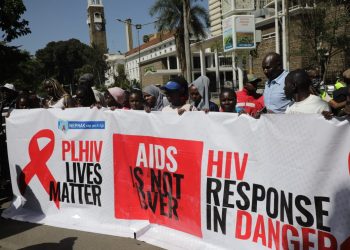





Since 2013, global efforts have been made to gain control over the AIDS epidemic by 2020 through UNAIDS’ 90-90-90 targets. The focus has been to have 90% of all people living with HIV know their status; and of those, 90% initiated on antiretroviral therapy (ART); and of those, 90% reaching viral suppression through ART adherence. Viral suppression means that virus in their blood is undetectable and they cannot transmit HIV sexually.
Much ground has been made towards achieving these goals. To date, 14 countries have reached the 90-90-90 targets. However, missed targets in other countries have allowed 3.5 million HIV infections and 820,000 AIDS-related deaths to occur since 2015.
One of the countries missing the mark is South Africa, which carries 20% of the global HIV burden. By 2018, encouragingly 90% of all people with HIV in South Africa knew their status. However, only 68% who knew their status were on ART; and of those, 87% were virally supressed. This equated to 61% of all people with HIV in South Africa initiated on sustained ART and 53% of all people with HIV virally suppressed.
Then, by late 2019, COVID-19 emerged and has now swept the globe. This new pandemic has shifted the projected course of public health resources and existing HIV campaigns. The South African National AIDS Council worries that the progress of multi-year strategic plans has been upended. This is a shared concern for many countries with a high burden of HIV.
COVID-19 has put a strain on the country’s already stretched health system. The measures taken to curb the spread have made it hard for people to access routine healthcare and medication for chronic noncommunicable disease as well as HIV. Strategies are needed to optimise health-related outcomes for all conditions, while still allowing the healthcare system to combat the novel pandemic.
COVID-19 and health systems
Hard national lockdowns around the globe, including South Africa’s, were essential to slow the transmission of COVID-19 and allow healthcare systems to prepare for the impending wave of critically ill patients.
Unfortunately, these unprecedented country-wide shutdowns have had downstream effects on other aspects of the public healthcare systems. They’ve created a serious threat for countries with a high prevalence of HIV. People relying on HIV prevention, care and treatment services have become even more vulnerable.
People with HIV need ART to survive, because there’s no cure or vaccine. During lockdown, patients were afraid to leave their homes to collect medications. The trepidation was brought on by the fear of contracting COVID-19, but also the threat of police brutality or incarceration through reinforcement of quarantine. For patients who did make it to ART dispensaries, many facilities experienced – and are still experiencing – supply-chain management deficiencies causing medication stock-outs. Additionally, due to the influx of COVID-19 patients, other services (such as reproductive health services) may have been unavailable.
The World Health Organisation and UNAIDS projected that a complete HIV treatment interruption of six months could lead to an excess of more than 500,000 AIDS-related deaths in sub-Saharan Africa over the next year. This is a major step backwards. In 2018, 470,000 AIDS-related deaths were reported in the region.
South Africa has one of the highest numbers of HIV cases and people on ART. The country would experience the largest changes in both HIV incidence and mortality due to ART interruptions. Treatment interruptions or delays will further compromise the immune systems of people with HIV. This could mean disease progresses to where the CD4 count is too low to be reconstituted or opportunistic infections become unmanageable.
These projections should scare everyone. As it stands, since April 2020, 36 countries containing 45% of the global ART patient population have reported disruptions in ART provision. Twenty-four countries are combating stock-outs of first line treatment regimens. Other by-products of a disrupted healthcare system are that 38 countries reported a substantial decrease in uptake of HIV testing.
South Africa is already seeing a nearly 20% decrease in ART collection in key provinces and a 10% decrease in viral load testing of ART patients since the introduction of lockdown in March. Even shorter, sporadic treatment disruptions can yield additional complications. These include an increase in the spread of HIV drug resistance, which carries long-term consequences for future treatment success.
HIV and COVID-19
Globally, scientists have focused mostly on the increased risk of COVID-19-related illness and death associated with noncommunicable diseases such as hypertension and diabetes.
Sadly, the role other infectious diseases play in health-related outcomes is largely forgotten. Hits to established HIV programmes make people with HIV even more vulnerable to adverse health events. It is, therefore, also important to understand that this same population is at increased risk of COVID-19-related morbidity and mortality.
There’s an intersect between noncommunicable diseases and infectious disease, with HIV at the centre. The nature of the virus and the treatment required means that people with HIV are at increased risk of inflammation and metabolic syndrome disease. This puts them at risk of chronic noncommunicable diseases – a risk-factor for COVID-19. Furthermore, ART has allowed people with HIV to live longer and naturally develop these comorbidities through increased age. People with active tuberculosis (TB) are over 2.5 times more likely to die from COVID-19. In South Africa, the TB/HIV co-infection rate is above 60%.
The first study published on the effect of COVID-19 infection among people with HIV in sub-Saharan Africa was reported from the Western Cape, South Africa. People with HIV have a 2.75 times greater risk of dying from COVID-19 than those without HIV. Viral suppression did not seem to affect health outcomes, with HIV accounting for about 8% of all COVID-related deaths. There is increased cause for concern when considering the high levels of HIV comorbidity with noncommunicable diseases and TB.
Way forward
The projected models must be taken seriously and strategies are required to sustain all vital health services.
There is an urgent need for global and local differentiated service delivery to ensure HIV service continuity – most critically uninterrupted ART supply – during the COVID-19 pandemic. These strategies could include a change in where HIV testing is provided and treatment is dispensed. Patients could be given longer treatment refills or bulk packs of treatment.
Community-based services could serve both pandemics. Such a strategy could relieve pressure on public healthcare facilities while protecting the most vulnerable populations who need to stay at home to minimise their risk of exposure.
With restricted global movement comes restricted imports of HIV tests and treatments. Countries must include locally manufactured medications within their national ART regimens. Governments, suppliers and donors need to avoid excess HIV-related deaths by creating an uninterrupted supply of ART.
If the world is single-minded and focuses purely on combating one pandemic (COVID-19), forgetting others, the effects of other morbidity and mortality on healthcare systems will be seen for a long time to come.
Kathryn L Hopkins, Perinatal HIV Research Unit, University of the Witwatersrand and Glenda Gray, Research Professor, Perinatal HIV Research Unit and President, South African Medical Research Council
This article is republished from The Conversation under a Creative Commons license. Read the original article.