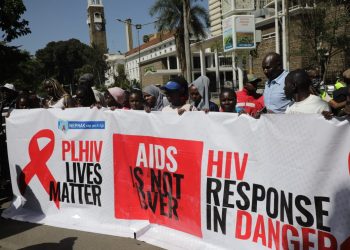

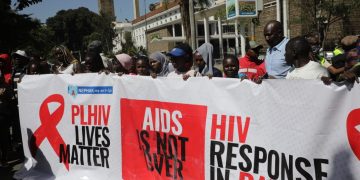




Across-section of adolescents and young women have expressed their excitement over the proposed introduction of a new monthly vaginal ring which will be able to protect them against HIV in Kenya.
Led by Ms Joyce Ouma—the adolescent and young women (AGYM)—described the dapivirine vaginal ring as “a game-changer” which will play a key role in reducing new HIV infections especially among women aged 18 years and older in Kenya and other developing countries.
According to experts, in Kenya, for example, about 275 young girls are getting HIV infection weekly with HIV infections highest among adolescent girls (aged 10 to 19 years) in the country and across Africa.
Various structural, social-cultural and legal barriers have been identified as some of the factors fuelling the spread of HIV among young girls.
These include gender inequality, discrimination, violence, limited access to education, lack of tailored services, multiple sex partners and poverty which inhibit women’s and girls’ access to health care and fuel new infections.
“As young women, we are excited that the dapivirine ring will give us a chance to prevent new HIV infections us we shall now be able to insert and remove the vaginal ring by ourselves,” said Ms Ouma.
Ambassadors for Youth official, Ms Jerop Limo, 24, said there was need for concerted efforts to be made in reducing new HIV infections among this age-group while Ms Faith Ndung’u said available options for HIV prevention among the youth needs to be intensified.
The World Aids Day 2020, which was commemorated on December 1, had the theme: “Global Solidarity and Shared Responsibility”. WACI Kenya Executive director, Ms Rosemary Mburu said about 1.5 million people were living with HIV with 35,000 new HIV infections occurring annually.
“We desire to have zero new HIV infections but the COVID-19 pandemic is posing a threat in the progress so far made in the fight against HIV.” A recent UNAids report, for example, says Coronavirus is likely to reverse progress and gains made against HIV in the last 10 years due to the existing weak health systems.
A leading Kenya Medical Research Institute (KEMRI) researcher, Dr Nelly Mugo emphasised that in Kenya and the African region— women and young girls contributed more than twice the number of new HIV infections—due to their biological make-up among other socio-cultural factors.
Dr Mugo described the dapivirine vaginal ring as a flexible, silicone ring that a woman can insert in the vagina for monthly protection against HIV.
“The ring is designed to provide women with a discreet and long-acting option for HIV prevention. It contains the antiretroviral drug dapivirine, which is released slowly to reduce the risk of HIV infection locally in the vagina with few effects in the bloodstream or elsewhere in the body.”
Dr Mugo said in several studies initially conducted in Belgium and the US, and then in Kenya, Malawi, South Africa and Tanzania—the ring was found to be safe, while other studies elsewhere also showed it was efficacious.
“The initial research included women aged 18—45, with additional safety studies among postmenopausal women and adolescent girls aged 15—17 in the USA.”
The ring was developed by the International Partnership for Microbicides (IPM), a non-profit organisation formed to develop HIV products and other sexual and reproductive health technologies for women. Fielding questions from journalists, Dr Mugo described the ring as “effective and acceptable to young women” since a sex partner would not know that the ring was in place during sex.
“The ring is re-usable, and one can remove it after one month, and then re-insert.”
She added that the intra-vaginal ring does not protect a user against pregnancy or sexually transmitted infections (STIs). According to experts, existing prevention methods have not done enough to stop the spread of HIV among women, who bear a disproportionate burden of the epidemic, particularly in sub-Saharan Africa.
Pending regulatory approval, the monthly dapivirine ring would provide women with the first discreet, long-acting prevention option. At the same time, there are an estimated 5,000 new HIV transmissions every day globally—with around 70 per cent of the 37 million people living with HIV globally are in sub-Saharan Africa.
For example, of the 1.8 million new infections which occurred in 2017, 800,000 occurred in Eastern and Southern Africa. The World Health Organisation says young girls and women (aged 15-24)—who are particularly at high risk—account for one in four HIV infections in sub-Saharan Africa despite being 10 per cent of the population.
The LVCT senior technical advisor, Ms Patricia Jeckonia said her organisation was carrying out a study on how much those willing to utilise the product would pay for the product while also generating demand uptake by tailoring appropriate messages to the Kenyan market to the target population.
A National Aids and STI Programme (NASCOP) programme officer, Maureen Inimah said an assessment done in 2010 revealed that only 7 per cent of health facilities in Kenya offered youth-friendly services.
The Pharmacy and Poisons Board (PPB) acting clinical trials Head, Dr Lydia Kitai said following the ring’s prequalification by the WHO, the Board would take between one to two months to approve the product for use in Kenya.