

By Pauline Achieng Tom @pauline_tom
Gaps in diagnosis and awareness of pediatric glaucoma is to blame for most cases of irreversible blindness in children.
Kenya has an urgent need to address the gaps in glaucoma and eyesight care, especially for children who have often been neglected.
According to Dr. Faith Masila a glaucoma specialist at P.C.E.A Kikuyu Hospital, treatment options are another obstacle patients have to face in the management of glaucoma, most hospitals are not equipped to offer glaucoma services and most treatment options are not widely available to Kenyans from low-income homes and they can be expensive.
“People need to be aware that children too can be affected by glaucoma. Due to ignorance, sometimes by the time children are taken to the hospital, the disease has progressed, parents need to be vigilant when it comes to their children,” she said.
Dr Masila spoke during commemoration of World Glaucoma Week, held every year in the third week of March which aims at raising awareness about this eye condition.
She adds that it is important to be aware of some causes of glaucoma including family history of glaucoma, being of African descent, long term use of eye drops with steroids, being over 40 years, Short-sightedness(myopia), diabetes, hypotension and thyroid disease.
She says that various platforms are actively engaged in educating people about adult glaucoma, public knowledge regarding paediatric and children glaucoma is scarce.
She stressed the importance of awareness, community sensitization, screening and early diagnosis to address the issue.
Dr Masila says that glaucoma in children is rare but is notably aggressive and can affect one or both eyes. Hence, parents must seek immediate medical assistance when they notice anything unusual in their children’s vision.
“If diagnosed early, glaucoma in children is reversible, however glaucoma is especially diagnosed late in children when the disease has progressed.”
Glaucoma is the second leading cause of vision loss globally and is more prevalent in Africans. The disease is silent, presenting with little to no symptoms and damages the optic nerve of the eye and if left untreated can cause Irreversible blindness.
In Kenya, it is estimated that 4.3 per cent of people above 50 years have glaucoma. However, testing and screening rates are very low, with about 90 per cent of cases in sub-Saharan Africa going undetected.
In an interview, Dr. Masila explained that while glaucoma is mostly associated with people who are 40 years old and above, children can also suffer from the disease, and it is important to raise awareness and identify cases early.
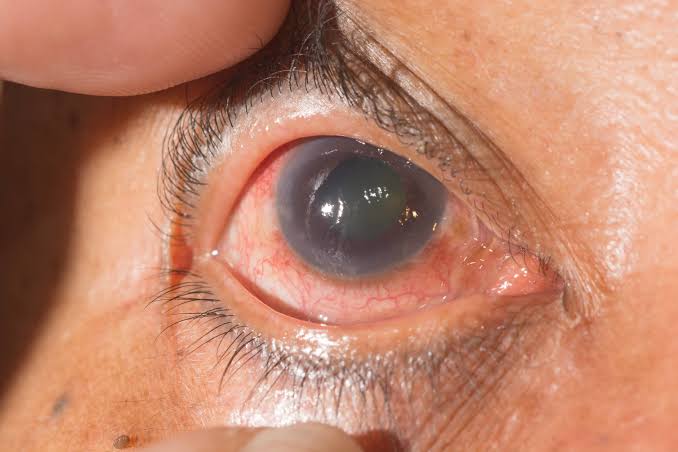
Glaucoma diagnosis is made through a comprehensive eye examination that includes measuring intraocular pressure, Dr. Masila advises parents to watch out for the symptoms “The symptoms of pediatric glaucoma may include excessive tearing, light sensitivity, cloudy or enlarged corneas, and a visible white or gray circle around the cornea.”
Currently, testing and screening rates are very low, according to World Health Organization (WHO) about 90 per cent of cases in sub-Saharan Africa go undetected, and the lack of equipment and skilled personnel are to blame for the low diagnosis levels of 2 per cent in rural East Africa.
To address the gaps in glaucoma and eyesight care, Kenya needs to take immediate steps to raise awareness and provide community sensitization, regular screening, and early diagnosis.
The government training health professionals is also a critical aspect in reducing the burden of glaucoma in the country. By providing specialized training, the government aims to equip health professionals with the necessary knowledge and skills to diagnose and manage glaucoma effectively, according to Dr Masila, it is inadequate knowledge of glaucoma that leads to late diagnosis.
“Sometimes despite early suspicion by parents when they seek out medical advice for their children they are advised to observe but that isn’t the correct information, health workers need to advice parents to go to the eye center if they notice anything unusual in their children’s eyes.”
Healthcare professionals and the government also need to work together to increase the availability of equipment and skilled personnel in rural areas, where diagnosis levels are low.
Treatment and management of glaucoma can be expensive since it is a lifelong illness.
“Glaucoma treatment requires that the eye pressure be controlled and since it’s a lifelong disease some patients may need eye drops and the good strong eye drops go for KSHs 1000 and above and most of the time a patient is on two or three at a time this can be very costly.”
Surgery can be a practical treatment alternative that, despite its greater success rate, is not commonly accessible. It not only halts further deterioration of eyesight but also, in most instances, eliminates the need for eye drops.
“While surgery is also expensive the prices may be reasonable when done in a government hospital and the best part it may be a one-off cost because one might need it only once and you might be off eye drops for the rest of your life or at least reduce the number of drops needed which will ultimately be cheaper.” says Dr Masila.
While the government is working on increasing awareness and availability of treatment options it is also important to consider rehabilitation services for those with low vision as well as stress the need for continued follow up since it’s a lifelong disease.
“There needs to be readily available rehabilitation services for those with progressed glaucoma and low vision, this will help improve their quality of life and make them realize they can still do a lot and live a good life.” Advised Dr. Masila.