

• Contact Us
Tuesday, December 30, 2025
Health Business
Advertisement
  • Home
  • News
    Kenya Accelerates Push Toward WHO Maturity Level 3 to Strengthen Pharmaceutical Regulation

    Kenya Accelerates Push Toward WHO Maturity Level 3 to Strengthen Pharmaceutical Regulation

    Liquid Gold: How Donor Human Milk is saving Premature Babies at Pumwani

    Liquid Gold: How Donor Human Milk is saving Premature Babies at Pumwani

    Beyond Bleeding Disorders: Novo Nordisk Foundation’s Bold Shift Brings New Hope for Millions Living with Sickle Cell and Haemophilia in Africa

    Beyond Bleeding Disorders: Novo Nordisk Foundation’s Bold Shift Brings New Hope for Millions Living with Sickle Cell and Haemophilia in Africa

    The Economics of Maternal Death: How Families Pay the Price When Mothers Die

    The Economics of Maternal Death: How Families Pay the Price When Mothers Die

  • Events
  • Private
    • KHF
    • Providers
  • Government
    • Medical Research
    • Politics & Policy
    • Regulation, Enforcement & Compliance
  • Finance
  • Tech
  • Epaper
  • Videos
  • Home
  • News
    Kenya Accelerates Push Toward WHO Maturity Level 3 to Strengthen Pharmaceutical Regulation

    Kenya Accelerates Push Toward WHO Maturity Level 3 to Strengthen Pharmaceutical Regulation

    Liquid Gold: How Donor Human Milk is saving Premature Babies at Pumwani

    Liquid Gold: How Donor Human Milk is saving Premature Babies at Pumwani

    Beyond Bleeding Disorders: Novo Nordisk Foundation’s Bold Shift Brings New Hope for Millions Living with Sickle Cell and Haemophilia in Africa

    Beyond Bleeding Disorders: Novo Nordisk Foundation’s Bold Shift Brings New Hope for Millions Living with Sickle Cell and Haemophilia in Africa

    The Economics of Maternal Death: How Families Pay the Price When Mothers Die

    The Economics of Maternal Death: How Families Pay the Price When Mothers Die

  • Events
  • Private
    • KHF
    • Providers
  • Government
    • Medical Research
    • Politics & Policy
    • Regulation, Enforcement & Compliance
  • Finance
  • Tech
  • Epaper
  • Videos
No Result
View All Result
Health Business
No Result
View All Result

Children in 98 per cent of African countries at high or extremely high risk of the impacts of climate change: UNICEF

by Samwel Doe Ouma
September 1, 2023
in News
0
Children in 98 per cent of African countries at high or extremely high risk of the impacts of climate change: UNICEF
Share This:

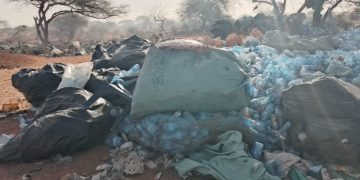
Children in Africa are among the most at risk of the impacts of climate change but are woefully neglected by the key climate financing flows required to help them adapt, survive and respond to the climate crisis.

According to a UNICEF report released today, Time to Act: African children in the climate change spotlight, children in 48 out of 49 African countries assessed, are categorized as at high or extremely high risk of the impacts of climate change. The analysis assesses countries based on children’s exposure to climate and environmental shocks, such as cyclones and heatwaves, as well as their vulnerability to those shocks, based on their access to essential services.

Children living in the Central African Republic, Chad, Nigeria, Guinea, Somalia and Guinea-Bissau are the most at risk.

In response to this increased risk to children, the report examines how multilateral climate funds (MCF) are targeting their resources. Just 2.4% of this key global climate funding can be classified as supporting child-responsive activities, with an average value of just $71 million per year. If the target group is increased to include youth, the figure rises to just 6.6percent of total MCF spending.

“It is clear that the youngest members of African society are bearing the brunt of the harsh effects of climate change,” Lieke van de Wiel, Deputy Director, UNICEF Eastern and Southern Africa region, said. “They are the least able to cope, due to physiological vulnerability and poor access to essential social services. We need to see a stronger focusing of funding towards this group, so they are equipped to face a lifetime of climate-induced disruptions.”

Children are more vulnerable than adults to the effects of climate and environmental shocks and stresses. They are physically less able to withstand and survive hazards such as floods, droughts, storms and heatwaves and are physiologically more vulnerable to toxic substances such as lead and other forms of pollution.

Despite substantial progress made by virtually all countries in the provision of essential services, persistent challenges contribute to an increased vulnerability for children, including limited access to good quality health and nutrition services, a lack of safe water, sanitation and hygiene, limited access to quality education and high levels of poverty.

Worryingly, the report reveals a strong correlation between countries with poor rankings on health, nutrition, WASH services and those ranking high or extremely high on the Children’s Climate Risk Index, highlighting how vulnerable these children are to the impacts of climate change. At the same time, children and young people are instrumental to long-term change and sustainability. Their ideas, creativity and skills need to be taken seriously and become integrated integral part of the solutions including policy and financing, as the time to act is now.

UNICEF and the United Nations Environment Programme (UNEP) are working together on an increasing number of projects that demonstrate how communities across Africa can become more resilient as they adapt to the impacts of a changing climate.

In the Sahel, a region that saw a wave of deadly climate-related disasters in 2022, UNICEF and partners implemented an integrated, people-centred approach across five social sectors including health, nutrition, water, education and protection services. The programme empowered communities to mitigate the effects of shocks and stresses and manage residual risks through participatory planning and comprehensive service delivery.

Since 2020, the programme has ensured that at least 3 million vulnerable people, of which 2.7 million are children, have access to essential services, especially in times of climate-induced shock and stress.

In the coastal region of Tanzania, a UNEP programme is working to reduce the damaging impact of sea-level rise on infrastructure through investing in seawalls, relocating boreholes, restoring mangrove forests and building rainwater harvesting systems through an all-ecosystem based approach to adaptation. As a result, the ability of the coastal communities to withstand rising sea-levels has increased and has also led to health improvements for the population through access to safe, clean water.

UNEP, UNICEF and the International Labour Organization (ILO), are working together with young people, governments, employers’ and workers’ organizations, and the private sector to design and implement the Green Jobs for Youth Pact. The Pact aims to develop 1 million new green jobs, transform 1 million existing jobs, and help 10,000 young green entrepreneurs start their businesses by 2030.

Rose Mwebaza, Regional Director for Africa for UNEP: “Young people have done the least to change the climate and, in Africa, are on the receiving end of its worst effects. We are working to support countries to adapt and build resilience in a rapidly changing climate through nature-based solutions, as well as investing in young people with the green skills and mindsets to support this urgent transition. But to see results, we must see a radical increase in investment in a sustainable future for young Africans.”


Share This:
Previous Post

Calling All African Health Leaders: Ensuring the Survival of Africa’s Children Demands African Leadership and Accountability

Next Post

Africa CDC calls for a One Health Approach to tackle the rising Climate-related Health threats in Africa

Related Posts

Kenya Accelerates Push Toward WHO Maturity Level 3 to Strengthen Pharmaceutical Regulation
News

Kenya Accelerates Push Toward WHO Maturity Level 3 to Strengthen Pharmaceutical Regulation

December 19, 2025
Liquid Gold: How Donor Human Milk is saving Premature Babies at Pumwani
News

Liquid Gold: How Donor Human Milk is saving Premature Babies at Pumwani

December 19, 2025
Beyond Bleeding Disorders: Novo Nordisk Foundation’s Bold Shift Brings New Hope for Millions Living with Sickle Cell and Haemophilia in Africa
News

Beyond Bleeding Disorders: Novo Nordisk Foundation’s Bold Shift Brings New Hope for Millions Living with Sickle Cell and Haemophilia in Africa

December 16, 2025
Next Post
Africa CDC calls for a One Health Approach to tackle the rising Climate-related Health threats in Africa

Africa CDC calls for a One Health Approach to tackle the rising Climate-related Health threats in Africa

Leave a Reply Cancel reply

Your email address will not be published. Required fields are marked *

No Result
View All Result

Follow Us

Most Read

  • Kenya Accelerates Push Toward WHO Maturity Level 3 to Strengthen Pharmaceutical Regulation

    Kenya Accelerates Push Toward WHO Maturity Level 3 to Strengthen Pharmaceutical Regulation

    0 shares
    Share 0 Tweet 0
  • The Economics of Maternal Death: How Families Pay the Price When Mothers Die

    0 shares
    Share 0 Tweet 0
  • Liquid Gold: How Donor Human Milk is saving Premature Babies at Pumwani

    0 shares
    Share 0 Tweet 0
Health Business

Health Business contains need-to-know features, news and case studies that explain the administrative and commercial issues affecting healthcare and hospital management. Health Business supports several high profile exhibitions - coverage of which is always timed for maximum impact. Regular topics include ICT, Finance/Funding, Facilities Management, Security, Health & Safety. Contributors range from government ministers through to top-level health administrators and association chairs.

Top Stories

Kenya Accelerates Push Toward WHO Maturity Level 3 to Strengthen Pharmaceutical Regulation

Kenya Accelerates Push Toward WHO Maturity Level 3 to Strengthen Pharmaceutical Regulation

December 19, 2025
Liquid Gold: How Donor Human Milk is saving Premature Babies at Pumwani

Liquid Gold: How Donor Human Milk is saving Premature Babies at Pumwani

December 19, 2025
Beyond Bleeding Disorders: Novo Nordisk Foundation’s Bold Shift Brings New Hope for Millions Living with Sickle Cell and Haemophilia in Africa

Beyond Bleeding Disorders: Novo Nordisk Foundation’s Bold Shift Brings New Hope for Millions Living with Sickle Cell and Haemophilia in Africa

December 16, 2025

Interests

  • Events
  • Finance
  • Government
  • Magazines
  • Medical Research
  • News
  • Politics & Policy
  • Providers
  • Public Health
  • Regulation, Enforcement & Compliance
  • Technology
  • Videos

Follow Us

  • Contact Us

© 2019 | Site by Mark & Ryse.

No Result
View All Result
  • Home
  • News
  • Events
  • Private
    • KHF
    • Providers
  • Government
    • Medical Research
    • Politics & Policy
    • Regulation, Enforcement & Compliance
  • Finance
  • Tech
  • Epaper
  • Videos

© 2019 | Site by Mark & Ryse.