



• Contact Us
Thursday, January 15, 2026
Health Business
Advertisement
  • Home
  • News
    PS Muthoni Calls for Increased Cervical Cancer Screening during January Awareness Month

    PS Muthoni Calls for Increased Cervical Cancer Screening during January Awareness Month

    Hazardous Waste Landfill in Wajir Remains Active Despite Court Oder

    Hazardous Waste Landfill in Wajir Remains Active Despite Court Oder

    Kenya Accelerates Push Toward WHO Maturity Level 3 to Strengthen Pharmaceutical Regulation

    Kenya Accelerates Push Toward WHO Maturity Level 3 to Strengthen Pharmaceutical Regulation

    Liquid Gold: How Donor Human Milk is saving Premature Babies at Pumwani

    Liquid Gold: How Donor Human Milk is saving Premature Babies at Pumwani

  • Events
  • Private
    • KHF
    • Providers
  • Government
    • Medical Research
    • Politics & Policy
    • Regulation, Enforcement & Compliance
  • Finance
  • Tech
  • Epaper
  • Videos
  • Home
  • News
    PS Muthoni Calls for Increased Cervical Cancer Screening during January Awareness Month

    PS Muthoni Calls for Increased Cervical Cancer Screening during January Awareness Month

    Hazardous Waste Landfill in Wajir Remains Active Despite Court Oder

    Hazardous Waste Landfill in Wajir Remains Active Despite Court Oder

    Kenya Accelerates Push Toward WHO Maturity Level 3 to Strengthen Pharmaceutical Regulation

    Kenya Accelerates Push Toward WHO Maturity Level 3 to Strengthen Pharmaceutical Regulation

    Liquid Gold: How Donor Human Milk is saving Premature Babies at Pumwani

    Liquid Gold: How Donor Human Milk is saving Premature Babies at Pumwani

  • Events
  • Private
    • KHF
    • Providers
  • Government
    • Medical Research
    • Politics & Policy
    • Regulation, Enforcement & Compliance
  • Finance
  • Tech
  • Epaper
  • Videos
No Result
View All Result
Health Business
No Result
View All Result

Kenya’s Primary Care Networks:Can They Bridge the Last Mile in Health Care?

by Samwel Doe Ouma
September 12, 2025
in News
0
Kenya’s Primary Care Networks:Can They Bridge the Last Mile in Health Care?
Share This:

When Kenya’s Primary Health Care Act of 2023 made Primary Care Networks (PCNs) law, it was a pivotal moment for Universal Health Coverage (UHC).

PCNs have been seen as a bold attempt to address the country’s fragmented and inefficient health system by creating a network of care.

PCNs goal is simple: connect dispensaries, health centers, and referral hospitals with community health units to deliver services closer to people’s homes and create a seamless continuum of care.

“The government’s commitment to reducing health disparities and ensuring equal access to healthcare is evident through the establishment of Primary Care Networks (PCNs)”Mary Muthoni Permanent secretary MoH state department of public health and professorial standards said.

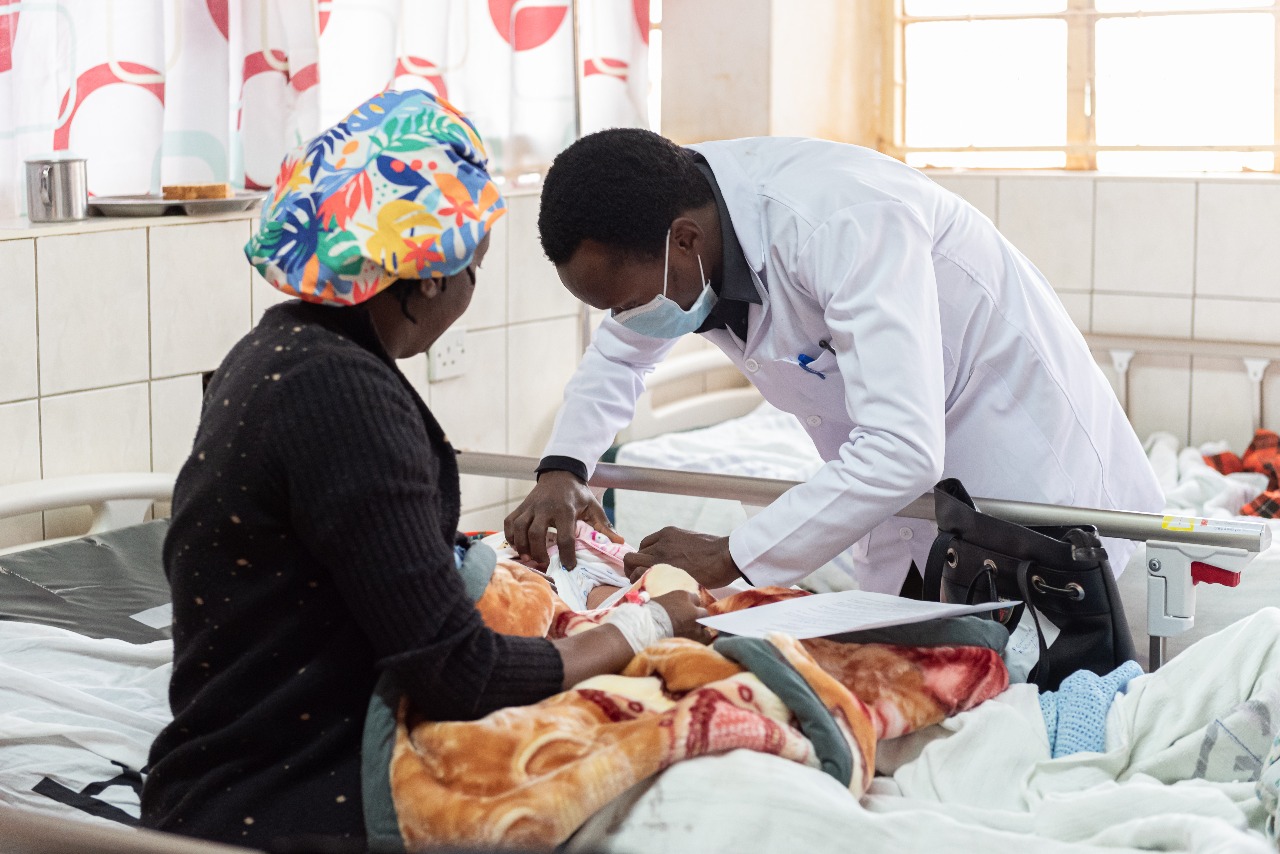
According to the PS Muthoni PCN reforms were born of necessity. Kenya’s health system has long been plagued by weak primary care. Patients often bypass local facilities due to frequent medicine stock-outs, staff shortages, and poor infrastructure, leading to crowded hospitals.

In response, the Ministry of Health piloted PCNs in Kisumu and Garissa in 2020. The model gained traction quickly, and by February 2025, 221 out of a national target of 315 PCNs had been formally established, with at least one per sub-county.

Political backing has been crucial, as strengthening primary health care was a key part of the current administration’s election manifesto, giving the PCN reform the legitimacy it needed to be taken seriously by counties.

However, a polcy brief by the Health Economics Research Unit (HERU) at the KEMRI-Wellcome Trust Research Programme and ThinkWell Global, reveals a mixed picture of PCN implementation.

Drawing on in-depth interviews with 51 stakeholders between February and June 2024 there’s progress such as facilities have been mapped and linked, and sensitization campaigns have been launched significant gaps remain.

The study revealed that many counties haven’t established the multi-disciplinary teams (MDTs) essential for coordinated care.

It also found out that digitization, including electronic records and telemedicine, is still in its infancy, hindering effective coordination and data collection.

Critically, the study revealed most counties haven’t secured the funding to sustain their networks.

“The reform often stops at the gazettement stage,” a county health manager lamented in the study. “Facilities still operate in isolation, with separate budgets and supply chains. We call it a network, but it’s just a collection of stand-alone units.”

Perhaps the biggest obstacle to PCN functionality is the pre-existing weakness of the health system itself. Dispensaries and health centers the intended entry points lack adequate staff, medicines, and infrastructure. This forces patients to bypass them, weakening gate-keeping and referral mechanisms.

Digital health is another major hurdle, as the roll-out of the electronic Community Health Information System (eCHIS) is inconsistent, and its integration with service delivery is patchy. Without interoperable systems, PCNs can’t function effectively or generate the data needed for planning and accountability.

Furthermore, PCN implementation has been heavily reliant on donor funding. Counties have allocated minimal domestic resources, a risky over-reliance that could leave the networks without support if donor priorities change.

Despite these challenges, experts view PCNs as Kenya’s best path to achieving people centered UHC.

Making PCNs work will require more than just legal frameworks; it demands deeper structural change.

The study team Beatrice Amboko, Jacinta Nzinga, Anita Musiega, Benjamin Tsofa, Peter Mugo, Rahab Mbau, Anne Musuva, Felix Murira, Ethan Wong, Caitlin Mazzilli, Wangari Ng’ang’a, Brittany Hagedorn, Nirmala Ravishankar, Salim Hussein, and Edwine Barasa recommends several critical actions.

They recommend that counties must allocate dedicated domestic budgets for PCNs; governance structures, like MDTs, need to be established and made functional; digitalization must become an operational reality, not just a pilot project; and PCNs must be fully integrated into public finance management systems, becoming legitimate planning and expenditure units.

Kenya’s PCN journey is young, but its ambition is clear: to provide equitable access to quality primary care for every Kenyan. The success of this reform hinges on the nation’s ability to invest, coordinate, and integrate. As one county health director aptly put it;

“PCNs aren’t just about drawing lines on a map. They’re about building the missing links in our health system. If we get them right, we change the future of healthcare in Kenya.”


Share This:
Previous Post

Junk food warning: More children are obese than underweight for the first time, Unicef report

Next Post

JOOTRH Elevated to Level C5 Parastatal, Ushering in a New Era of Health Reform

Related Posts

PS Muthoni Calls for Increased Cervical Cancer Screening during January Awareness Month
News

PS Muthoni Calls for Increased Cervical Cancer Screening during January Awareness Month

January 13, 2026
Hazardous Waste Landfill in Wajir Remains Active Despite Court Oder
News

Hazardous Waste Landfill in Wajir Remains Active Despite Court Oder

January 8, 2026
Kenya Accelerates Push Toward WHO Maturity Level 3 to Strengthen Pharmaceutical Regulation
News

Kenya Accelerates Push Toward WHO Maturity Level 3 to Strengthen Pharmaceutical Regulation

December 19, 2025
Next Post
JOOTRH Elevated to Level C5 Parastatal, Ushering in a New Era of Health Reform

JOOTRH Elevated to Level C5 Parastatal, Ushering in a New Era of Health Reform

Leave a Reply Cancel reply

Your email address will not be published. Required fields are marked *

No Result
View All Result

Follow Us

Most Read

  • PS Muthoni Calls for Increased Cervical Cancer Screening during January Awareness Month

    PS Muthoni Calls for Increased Cervical Cancer Screening during January Awareness Month

    0 shares
    Share 0 Tweet 0
  • Hazardous Waste Landfill in Wajir Remains Active Despite Court Oder

    0 shares
    Share 0 Tweet 0
  • Kenya transitions from two-test to three-test HIV algorithm for accuracy, sensitivity and specificity of diagnosis to improve linkage to care

    0 shares
    Share 0 Tweet 0
Health Business

Health Business contains need-to-know features, news and case studies that explain the administrative and commercial issues affecting healthcare and hospital management. Health Business supports several high profile exhibitions - coverage of which is always timed for maximum impact. Regular topics include ICT, Finance/Funding, Facilities Management, Security, Health & Safety. Contributors range from government ministers through to top-level health administrators and association chairs.

Top Stories

PS Muthoni Calls for Increased Cervical Cancer Screening during January Awareness Month

PS Muthoni Calls for Increased Cervical Cancer Screening during January Awareness Month

January 13, 2026
Hazardous Waste Landfill in Wajir Remains Active Despite Court Oder

Hazardous Waste Landfill in Wajir Remains Active Despite Court Oder

January 8, 2026
Kenya Accelerates Push Toward WHO Maturity Level 3 to Strengthen Pharmaceutical Regulation

Kenya Accelerates Push Toward WHO Maturity Level 3 to Strengthen Pharmaceutical Regulation

December 19, 2025

Interests

  • Events
  • Finance
  • Government
  • Magazines
  • Medical Research
  • News
  • Politics & Policy
  • Providers
  • Public Health
  • Regulation, Enforcement & Compliance
  • Technology
  • Videos

Follow Us

  • Contact Us

© 2019 | Site by Mark & Ryse.

No Result
View All Result
  • Home
  • News
  • Events
  • Private
    • KHF
    • Providers
  • Government
    • Medical Research
    • Politics & Policy
    • Regulation, Enforcement & Compliance
  • Finance
  • Tech
  • Epaper
  • Videos

© 2019 | Site by Mark & Ryse.