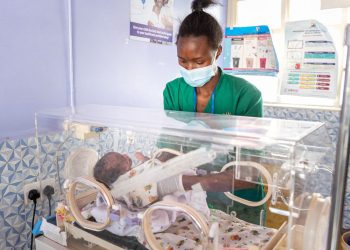


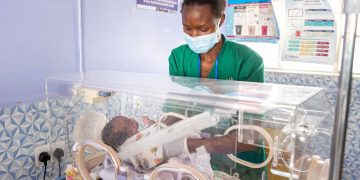



Kenyatta National Hospital (KNH) has launched an Immediate Kangaroo Mother Care (iKMC) unit, marking a major shift in how Kenya’s largest referral hospital cares for preterm and low-birth-weight infants.
The milestone was announced on Monday as the hospital joined the world in commemorating World Prematurity Day, observed every year on November 17.
Dr. Wairimu Kimani, Head of the Newborn Unit at KNH, said that iKMC launch represents “a truly momentous occasion” and a turning point for newborn survival in Kenya.
“We are launching the immediate kangaroo mother care unit, which is a goal towards zero separation for the mother and the baby right from birth, even before the babies are fully stabilized,” she said.
The new eight-bed unit at KNH will allow mothers to hold their small or sick newborns skin-to-skin for extended periods sometimes up to eight to 20 hours a day immediately after delivery, a departure from traditional practice, where fragile babies are typically placed in incubators or warmers until they stabilize.
Ethypharm a pharmaceutical company which offers drugs for pain treatment, critical care, cardiovascular, gastrointestinal, and central nervous system disease will donate sanitizers to besides each bed to ensure that infection prevention and control is managed in the KNH IKMC ward.
A Proven Lifeline for Preterm Babies
Dr Wairimu said that Kangaroo Mother Care (KMC) is not new. First introduced in the 1970s in Bogotá, Colombia, it was originally developed as an emergency response to incubator shortages. But scientific evidence has since elevated it from a stopgap measure to a lifesaving intervention.
She explained that a landmark multi-country trial conducted in Malawi, Tanzania, Nigeria, Ghana and India demonstrated that immediate KMC started within minutes of birth can significantly reduce mortality among babies weighing between 1,000 and 800 grams.
“The practice was also associated with fewer infections, less hypothermia and better breastfeeding outcomes.”
“Recent evidence shows that immediate kangaroo mother care has an enormous impact in reducing mortality for small and sick babies,” Dr. Kimani explained. “It reduces hypothermia, reduces infection, increases exclusive breastfeeding rates and empowers mothers to feel strong and competent in continuing care at home.”
Following updated WHO recommendations in 2023, KNH is now one of the first major hospitals in Kenya to establish a dedicated immediate KMC unit.
How Immediate KMC Works
The process begins even before delivery, Mothers in preterm labour receive antenatal counselling about what to expect and how immediate KMC works. After birth, babies are placed directly on their mother’s chest—skin-to-skin—while still receiving full medical care.
“We are not changing the care the baby needs,” Dr. Kimani emphasized. “If they require IV fluids, antibiotics, phototherapy or monitoring, all of that continues. We are only changing the place—providing the care on the mother’s chest rather than in an incubator.”
The model requires collaboration between neonatologists, neonatal nurses, and obstetric teams, since postnatal care for mothers continues while the babies are on their chests.
Surrogates such as fathers, grandmothers or close relatives can also provide skin-to-skin care if the mother is unwell a practice shown in clinical trials to maintain the benefits of maternal warmth and microbiome transfer.
Rethinking Hospital Design
One of the biggest implications of immediate KMC is the need to rethink how maternity and newborn units are designed.
“Most infections babies acquire are not actually from their mothers—they come from us as healthcare providers,” Dr. Kimani noted. “Mothers care for only their baby, and in that way, you break the chain of infection.”
Space constraints and traditional layouts, which often separate mothers from newborns, remain major challenges in many hospitals. However, KNH managed to remodel an existing postnatal room by adding piped oxygen and reorganizing care workflows.
“It requires a change in thinking,” she said. “Start with what you have. Start small if you must—but begin with the principle of zero separation.”
Looking Ahead: Survival and Beyond
As KNH rolls out the new unit, the goal is not just to ensure babies survive—but that they thrive.
“We are hoping to see a big reduction in neonatal mortality, shortened hospital stays, and healthier babies who continue to grow well at home and in their communities,” said Dr. Kimani.
With Kenya still recording more than 22 neonatal deaths per 1,000 live births, innovations like immediate KMC could be catalytic in accelerating progress toward national and global newborn survival targets.