




Kenya’s fight against HIV, despite significant gains, is losing the battle for public attention. In a bold attempt to reignite national urgency around what advocates warn is a “fading crisis,” key health institutions and media regulator have launched a major journalism competition designed to restore HIV to the forefront of public consciousness.
The Voice of Impact: HIV & STI Media Awards 2026 unveiled this week by the National Syndemic Diseases Control Council (NSDCC), National AIDS and STIs Control Program (NASCOP), Aids Healthcare Federation (AHF) Kenya, and the Media Council of Kenya (MCK).
The awards, one of the largest cash prizes ever offered for health reporting in Kenya, include top prizes of US$5,000, US$3,000, and US$1,500, along with twenty story-writing grants worth Kshs 15,000 each for journalists pursuing in-depth reporting.
According to Nelson Otwoma,Executive Director of National Empowerment Network of People Living with HIV/AIDS in Kenya (NEPHAK)the initiative comes at a pivotal moment, as success has bred complacency.
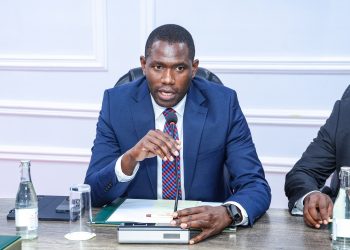
Douglas Bosire, Acting CEO of the NSDCC, noted that while Kenya has made substantial progress, “the narrative around the epidemic has faded from national consciousness.”
He noted that despite 1.4 million Kenyans still living with HIV, and over 1.3 million currently on life-saving treatment, the crisis persists.
Paul Oyier of the MCK agreed, lamenting the quiet loss of “HIV awareness.”
“HIV has disappeared from the front pages. Stories are buried on page five, or not told at all. Meanwhile, infections are rising among our most vulnerable,” Oyier warned.
Dr. Samuel Kinyanjui of AHF Kenya offered a stark warning saying that the virus has not gone away. It has only been suppressed.
“And suppression can disappear within months if we stop paying attention.”
Bosire presented sobering data, revealing that adolescents and young people now account for 59% of new infections. This surge is attributed to the complex intersection of factors known as the “triple threat”: new HIV infections, teenage pregnancies, and gender-based violence.
The awards are intended to combat the rising tide of misinformation and stigma by compelling journalists to act as “architects of public understanding.”
Dr. Kinyanjui passionately articulated the power of the press saying, “We, in public health, write 600-page reports no one reads. But you your pen can shift the direction of the people. That is why you are the most important stakeholder.”
The organizers are seeking stories that move beyond raw statistics—narratives that spotlight human lives, systemic failures, and actionable solutions.
Judging criteria, as outlined by Media Council of Kenya representative Oyier said that the jury will prioritize relevance, depth, accuracy, human impact, ethics, and a gender-equity lens.
“We want stories that change behaviour,” Oyier emphasized. “If infections go down, then you know you have done your job.”
Dr. Kinyanjui described the awards as more than a competition—it is “Kenya’s annual audit” conducted not by bureaucrats, but by storytellers. “You can make the truth impossible to ignore.”
Bosire echoed the urgency, stressing that global funding uncertainties mean Kenya must increasingly rely on its own systems and robust public engagement to sustain progress. He warned that Kenya has not yet reached epidemic control, with 20,000 new infections and 21,000 deaths annually.
“We are almost there, but not yet,” Bosire said. “And the last mile requires visibility, prioritization, and narrative change.”
The initiative aims to restore depth, empathy, and urgency to the national HIV discourse, with Bosire closing the launch with a plea: “Tell the story that matters. Elevate the conversation. Give young people hope. You are the heroes of this movement.”