
• Contact Us
Friday, January 30, 2026
Health Business
Advertisement
  • Home
  • News
    The Last Mile: Africa’s Neglected Diseases Supply Chain Revolution

    The Last Mile: Africa’s Neglected Diseases Supply Chain Revolution

    FGS Mislabeled as an STI: The neglected waterborne Parasite Costing African Women Their Dignity

    FGS Mislabeled as an STI: The neglected waterborne Parasite Costing African Women Their Dignity

    Metropolitan Hospital, Marengo Asia Hospitals to perform robotic-assisted knee replacement surgeries in East and Central Africa 

    Metropolitan Hospital, Marengo Asia Hospitals to perform robotic-assisted knee replacement surgeries in East and Central Africa

    Kenya hosts AMR2026 conference to shape policy response to antimicrobial resistance

    Kenya hosts AMR2026 conference to shape policy response to antimicrobial resistance

  • Events
  • Private
    • KHF
    • Providers
  • Government
    • Medical Research
    • Politics & Policy
    • Regulation, Enforcement & Compliance
  • Finance
  • Tech
  • Epaper
  • Videos
  • Home
  • News
    The Last Mile: Africa’s Neglected Diseases Supply Chain Revolution

    The Last Mile: Africa’s Neglected Diseases Supply Chain Revolution

    FGS Mislabeled as an STI: The neglected waterborne Parasite Costing African Women Their Dignity

    FGS Mislabeled as an STI: The neglected waterborne Parasite Costing African Women Their Dignity

    Metropolitan Hospital, Marengo Asia Hospitals to perform robotic-assisted knee replacement surgeries in East and Central Africa 

    Metropolitan Hospital, Marengo Asia Hospitals to perform robotic-assisted knee replacement surgeries in East and Central Africa

    Kenya hosts AMR2026 conference to shape policy response to antimicrobial resistance

    Kenya hosts AMR2026 conference to shape policy response to antimicrobial resistance

  • Events
  • Private
    • KHF
    • Providers
  • Government
    • Medical Research
    • Politics & Policy
    • Regulation, Enforcement & Compliance
  • Finance
  • Tech
  • Epaper
  • Videos
No Result
View All Result
Health Business
No Result
View All Result

The Last Mile: Africa’s Neglected Diseases Supply Chain Revolution

by Samwel Doe Ouma
January 30, 2026
in News
0
The Last Mile: Africa’s Neglected Diseases Supply Chain Revolution
Share This:


In the high-stakes theater of global health, the “lab-to-factory” pipeline is a triumph of science, but the “port-to-patient” pipeline remains a war of attrition.

Across East Africa, the battle against Neglected Tropical Diseases (NTDs) is being won not by a new miracle drug, but by the unglamorous mastery of logistics. Through the Supply Chain Technical Support Mechanism (SCTSM), led by JSI and supported by inSupply Health, nations including Kenya, Ethiopia, Uganda, and Tanzania are proving that in the fight against poverty-driven pathogens, the supply chain is the ultimate medicine.

For decades, the campaign against diseases like schistosomiasis and river blindness followed a predictable, if flawed script. Pharmaceutical giants such as GSK, Merck, and Pfizer donated billions of tablets. Governments accepted them. But once those crates hit the tarmac in Addis Ababa, Nairobi or Dar es Salaam, the trail often went cold. In the “last mile,” life-saving medicine met its greatest enemies: fragmented data, manual spreadsheets, and the ticking clock of an expiration date.

A quiet revolution is now treating that supply chain as the cure. According to Daniel Teferi, a supply chain Advisor with JSI Ethiopia, these four nations are moving away from “just-in-time” crisis management toward a data-driven, sovereign logistics model.

He says that the irony of NTD programs has long been that “plenty” often leads to “waste.” Since late 2023, the SCTSM has overseen the movement of millions of tablets, but its most critical metric is not what arrived, but what didn’t expire.

In Ethiopia, the Ministry of Health utilizes standardized reporting tools supported by the World Health Organization to manage inventory. “These tools enable data triangulation to track treatment coverage, identify specific medicine needs, and manage drug inventory for prioritized diseases like trachoma and schistosomiasis,” Teferi said. He noted that Ethiopia is also mainstreaming NTD control within its primary healthcare system and integrating data into national dashboards to strengthen routine surveillance.

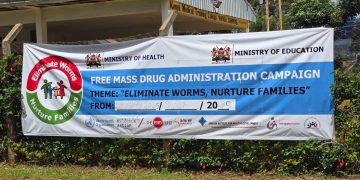
Mass drug administration (MDA) remains the primary strategy for eliminating several NTDs. However, Vincent Manyilizu, regional manager at inSupply Health Tanzania, said that before the SCTSM intervention, monitoring was conducted through paper forms and Excel spreadsheets. These methods were slow, prone to errors, and failed to facilitate timely decision-making.

The shift to digitized tracking has already yielded tangible results. In early 2025, proactive stock-tracking in Tanzania and Kenya flagged millions of tablets at risk of expiry. Rapid redistribution ensured they reached communities before a February deadline.

“Delivering medicines to a country’s port is only the beginning,” Manyilizu said. “If the systems that move them are weak, people remain untreated even when the drugs are sitting in-country.”

Historically, NTD programs were “vertical,” operating on specialized, isolated supply lines. The SCTSM is dismantling these silos by integrating NTD commodities into DHIS2 a national health data platform and electronic logistics systems. This gives health officials a comprehensive view of inventory from the central warehouse to the remote village.

In Tanzania, the project has improved forecasting and strengthened distribution systems to create a more cost-effective chain.

Manyilizu argues that the most potent tool in this new arsenal is not a vaccine, but a multi-year forecasting spreadsheet. Healthcare workers and supply chain officers in Tanzania are now trained to project demand through 2027.

This shift has flipped the global power dynamic. By sharing three-year outlooks with pharmaceutical donors, African nations are no longer passive recipients of whatever arrives. They have become strategic partners, telling the global market exactly what they need and when they can handle it.

In the high-stakes effort to meet global elimination targets, efficiency has become an act of equity. Every expired tablet represents a lost opportunity to break the cycle of poverty that NTDs perpetuate.

As Kenya moves toward official elimination certification for several diseases, the lesson for the global health community is clear: The most advanced medicine in the world is useless if the logistics chain cannot survive the final mile.

The JSI-led Supply Chain Technical Support Mechanism (SCTSM) receives support from the Gates Foundation.

Share This:
Previous Post

FGS Mislabeled as an STI: The neglected waterborne Parasite Costing African Women Their Dignity

Related Posts

FGS Mislabeled as an STI: The neglected waterborne Parasite Costing African Women Their Dignity
News

FGS Mislabeled as an STI: The neglected waterborne Parasite Costing African Women Their Dignity

January 29, 2026
Metropolitan Hospital, Marengo Asia Hospitals to perform robotic-assisted knee replacement surgeries in East and Central Africa 
News

Metropolitan Hospital, Marengo Asia Hospitals to perform robotic-assisted knee replacement surgeries in East and Central Africa

January 22, 2026
Kenya hosts AMR2026 conference to shape policy response to antimicrobial resistance
News

Kenya hosts AMR2026 conference to shape policy response to antimicrobial resistance

January 21, 2026

Leave a Reply Cancel reply

Your email address will not be published. Required fields are marked *

No Result
View All Result

Follow Us

Most Read

  • FGS Mislabeled as an STI: The neglected waterborne Parasite Costing African Women Their Dignity

    FGS Mislabeled as an STI: The neglected waterborne Parasite Costing African Women Their Dignity

    0 shares
    Share 0 Tweet 0
  • Technology expert says Kenya is the ‘Promised Land’ of telemedicine

    0 shares
    Share 0 Tweet 0
  • Metropolitan Hospital, Marengo Asia Hospitals to perform robotic-assisted knee replacement surgeries in East and Central Africa

    0 shares
    Share 0 Tweet 0
Health Business

Health Business contains need-to-know features, news and case studies that explain the administrative and commercial issues affecting healthcare and hospital management. Health Business supports several high profile exhibitions - coverage of which is always timed for maximum impact. Regular topics include ICT, Finance/Funding, Facilities Management, Security, Health & Safety. Contributors range from government ministers through to top-level health administrators and association chairs.

Top Stories

The Last Mile: Africa’s Neglected Diseases Supply Chain Revolution

The Last Mile: Africa’s Neglected Diseases Supply Chain Revolution

January 30, 2026
FGS Mislabeled as an STI: The neglected waterborne Parasite Costing African Women Their Dignity

FGS Mislabeled as an STI: The neglected waterborne Parasite Costing African Women Their Dignity

January 29, 2026
Metropolitan Hospital, Marengo Asia Hospitals to perform robotic-assisted knee replacement surgeries in East and Central Africa 

Metropolitan Hospital, Marengo Asia Hospitals to perform robotic-assisted knee replacement surgeries in East and Central Africa

January 22, 2026

Interests

  • Events
  • Finance
  • Government
  • Magazines
  • Medical Research
  • News
  • Politics & Policy
  • Providers
  • Public Health
  • Regulation, Enforcement & Compliance
  • Technology
  • Videos

Follow Us

  • Contact Us

© 2019 | Site by Mark & Ryse.

No Result
View All Result
  • Home
  • News
  • Events
  • Private
    • KHF
    • Providers
  • Government
    • Medical Research
    • Politics & Policy
    • Regulation, Enforcement & Compliance
  • Finance
  • Tech
  • Epaper
  • Videos

© 2019 | Site by Mark & Ryse.