




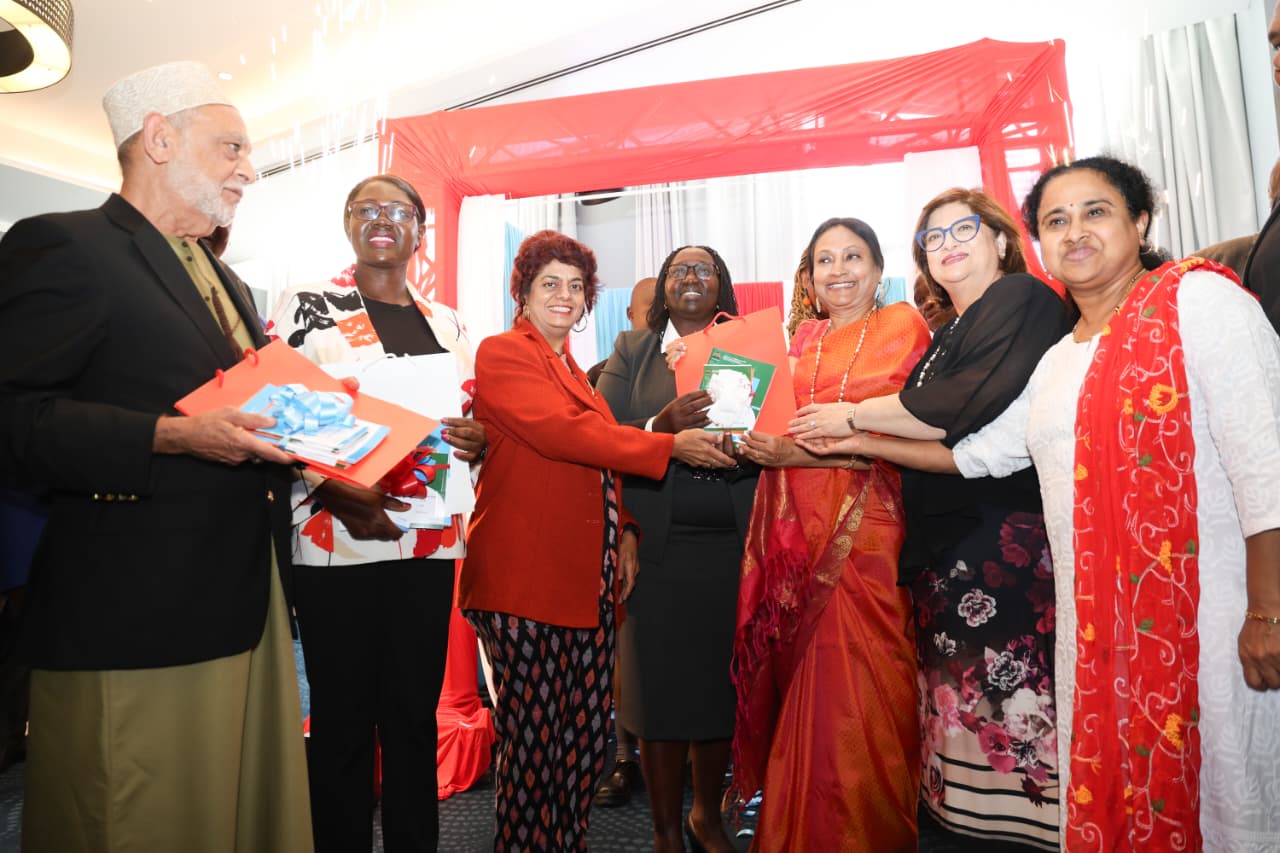
Religious leaders from all major faiths in Kenya have signed the National Religious Leaders’ Declaration on Child Safeguarding, committing to protect children from violence, abuse, and harmful practices.
The declaration was signed during the first National Religious Leaders’ Summit on Child Safeguarding, convened by the Ministry of Gender, Culture and Children Services in partnership with the Inter-Religious Council of Kenya (IRCK) and UNICEF.
The summit also saw the launch of “Faith for Life: Protecting and Safeguarding Our Children,” a faith-based handbook aimed at guiding religious institutions on child-friendly policies, safe practices, and positive parenting. The handbook is expected to strengthen prevention and response mechanisms within faith communities.
Speaking at the event, Cabinet Secretary for Gender, Culture and Children Services, Hon. Hanna Wendot Cheptumo, said the government remains committed to ending violence against children through collaboration with faith actors and other stakeholders.
She noted that while Kenya has made progress through Article 53 of the Constitution, the Children Act (2022), and international commitments such as the UN Convention on the Rights of the Child, cases of violence against children persist, often within homes and institutions meant to offer care and protection.
IRCK Chair Sheikh Abdullahi Salat said faith leaders have a moral obligation to safeguard children, citing teachings from different religious traditions that emphasize care, mercy, and protection of the young.
“Faith institutions reach millions of families every week and must use that influence to challenge harmful norms and promote child-friendly values,” he said.
UNICEF Deputy Representative Mahboob Bajwa described the declaration and handbook as critical tools for driving social change.
“When religious leaders speak consistently against violence and promote dignity and accountability, attitudes shift and communities become safer for children,” Bajwa said.
With the declaration adopted and the handbook rolled out nationwide, stakeholders say the initiative marks a new phase of coordinated action between government, faith institutions, and communities to ensure children across Kenya grow up free from violence.
Following the Children Safeguard Summit held under the theme “Faith for Life: Protecting and Safeguarding Our Children,” the Cabinet Secretary for Gender, Culture and Children Services, Ms. Hanna Wendot Cheptumo, said that the newly launched guidelines in the safeguarding handbook also protect the rights of children living with their mothers in prison.
Speaking during a press conference, the Cabinet Secretary noted that the Constitution of Kenya provides that children below the age of four should remain under their mother’s care before being placed in any institutional setting. She said the policy aligns with the spirit of “Faith for Life: Protecting and Safeguarding Our Children,” ensuring that no child is denied their rights due to the circumstances of their parent.
Ms. Cheptumo said that she recently visited the Eldoret Women’s Prison, where she observed that children living with their mothers were well cared for and had access to early childhood education. However, she raised concern over the limited space available for the children to play and interact.
“As much as the children are being well taken care of, the play area is too small. We will work together with the government to ensure they are provided with a better and more child-friendly environment,” she said.
The Cabinet Secretary added that the safeguarding policy also applies to children living and working on the streets, stressing that they should not be overlooked regardless of their circumstances. She expressed concern over the rising cases of abuse among street-connected children, noting that many suffer in silence with no one to defend them.