
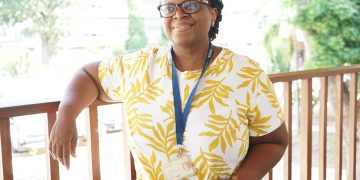
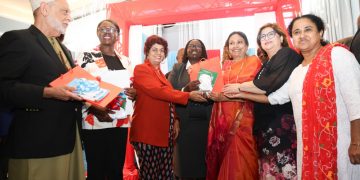


As the world celebrates the international Day of Women and Girls in Science, it is important to highlight the journey of women who have broken the mold; one such woman is Dr Neema Mturi a consultant Pediatrician at Kemri Wellcome Trust.
She also works as a researcher in pediatrics at the high dependency unit at the Kilifi District Hospital.
Healthbusiness’ Samwel Doe asked her a few questions on her journey in STEM and these were her answers.
1) What is the International Day of Women and Girls in Science, and why does it matter in 2026 particularly for Africa’s health and innovation landscape?
The International Day of Women and Girls in Science is a global reminder that scientific progress is strongest when everyone is included. It celebrates the contributions of women and girls in STEM while also highlighting the barriers that limit their full participation in the world of the sciences.
In 2026, this day matters especially for Africa because our health challenges that include infectious diseases and the increasing burden of non-communicable conditions need local solutions that are driven by research, innovation, and strong health systems. When women are empowered to lead in science and medicine, then we strengthen our capacity to generate evidence, design context and culturally specific interventions and drive innovative solutions that respond to real community needs.
2) Can you tell us about your journey into medicine and paediatric research? What inspired you to pursue a career in STEM, and what defining moments shaped your path?
My journey into medicine was driven by a desire to serve the community and to improve the health of children (and partly also because “back in my day…” if you happened to be good in the sciences, then there seemed to be certain pre-defined career paths for you!). Paediatrics in particular resonated with me because paying attention to childhood diseases improves early years’ survival as well as long-term development which allows children to realize their full potential.
As I progressed in my clinical training, I became increasingly aware that many of the challenges we face in child health cannot be solved by bedside clinical care alone, looking after one child at a time. We also need research so that we can understand disease patterns, identify gaps in care, and generate the evidence for solutions that work in our settings. Some of the defining moments for me came from contributing to research that has shaped policy in antimalarial treatment, what antibiotics to give to vulnerable populations such as sick newborns and children with severe malnutrition; and research on how to give intravenous fluids to very sick children
3) The 2026 theme focuses on “From Vision to Impact.” How have you translated scientific vision into real-world health impact in your work at KEMRI–Wellcome Trust?
For me, “From Vision to Impact” means ensuring that research does not remain only within academic spaces also but reaches the bedside and the community. At the KEMRI–Wellcome Research Programme, our work is grounded in generating high-quality evidence while keeping the end goal in mind: better health outcomes for children and families.
In my role, I see impact through strengthening clinical services, supporting ethical and high-standard research environments, and ensuring that evidence can be applied in real-world settings. This includes improving the quality of care, building capacity among health workers, and contributing to research that informs both policy and practice.
4) What are the most tangible benefits of STEM programs for girls in school, and how do early interventions translate into sustainable careers for women in science and medicine?
STEM programs for girls build confidence, curiosity, and problem-solving skills early. These skills are essential not only for science careers but also for leadership positions in general. They help girls to see themselves in roles that society has traditionally reserved for men and may not always encourage them to pursue.
Early interventions matter because they create exposure and self-belief. When girls see female scientists, doctors, engineers, and researchers, STEM becomes something that they can aspire to and dream about instead of something that seems so distant and unattainable. When this early encouragement is followed by practical support that includes mentorship, scholarships and opportunities for hands-on learning through science clubs, laboratories, and internships, then it makes a huge difference in opening up the world of science to girls and young women.
5) From your experience, how do women working in STEM uniquely contribute to areas such as childhood disease research, treatment development, and patient-centered care?
Women in STEM bring valuable perspectives shaped by lived experience, empathy, and an orientation toward holistic care. In child health, patient-centered care brings attention not only to the child’s diagnosis, but also to the mother or caregiver; the home environment; and the social factors that influence recovery and long-term wellbeing.
In research and treatment development, women often advocate for inclusive approaches which ensure that studies consider diverse populations, and that interventions are culturally responsive particularly in health research that is community-facing.
6) You are involved in the study of African children with cerebral malaria. Why is this research so critical, and what gaps in knowledge or care is it aiming to address?
Cerebral malaria remains one of the most severe and life-threatening complications of malaria in children, and it also carries a high risk of death and long-term neurological effects among survivors. Research in this area is critical because the burden is disproportionately borne by African children, yet gaps still exist in understanding the full spectrum of outcomes and how best to support recovery.
Some of the work that the Programme has been involved in aims to address important gaps in knowledge around the mechanisms of brain injury, the predictors of poor outcomes, and how to strengthen clinical management and follow-up care. It also helps us better understand what families experience after discharge and how to develop structures to support rehabilitation and long term care for children and families that have been affected by the neuro-sequalae of cerebral malaria.
7) Who has inspired you in the health or science sector, and how has mentorship shaped your career and leadership style?
I have been inspired by mentors and colleagues who model excellence, integrity and commitment to clinical service. I have also been exposed to managers and supervisors who lead with humility while remaining committed to evidence-based practice and meaningful impact. If I can mention one enduring mentor it will be Professor Charles Newton, Professor of Paediatric Neurology, who has played a major role in shaping my career by providing guidance, encouragement, and opportunities to grow in confidence and leadership.
As a leader, mentorship reminds me of the importance of creating space for others.to learn, contribute, and thrive. One of my current roles is that of supervision of Medical Interns in the paediatric High Dependency Unit (HDU) within the Kilifi County Referral Hospital. I believe leadership is not only about personal achievement, but about building strong teams which also includes supporting the next generation of clinicians and scientists.
8) Despite progress, women remain underrepresented in many STEM fields. What practical steps at policy, institutional, and community levels are needed to truly close the gender gap?
Closing the gender gap requires practical action at several different levels. At policy level, we need bigger investment in girls’ education which may include exclusive scholarships targeting young women and girls. We also need policies that protect women in training and work environments from discrimination and harassment.
At institutional level, workplaces should promote inclusive recruitment, equal opportunities for advancement for both men and women, supportive mentorship structures, and family-friendly policies that allow women to progress in their careers without being forced to choose between careers and caregiving.
At community level, we must challenge cultural stereotypes that discourage girls from pursuing science. Families and schools play a powerful role in shaping confidence and ambition in young girls. I still remember to this day Mr. David Brook, my chemistry teacher in High School who believed that girls have a place in the laboratory, and the sciences were absolutely a place where young women could find a home and thrive.
9) On this International Day of Women and Girls in Science, what message would you share with young girls across Africa who aspire to careers in science, technology, or medicine?
My message to young girls across Africa is ‘You belong in science. Your curiosity, your ideas, and your dreams are both valid and valuable, and the continent needs your talent and leadership.”
Don’t be afraid to start! Ask questions, be curious, learn, and seek out mentors who will guide you. Challenges may come, but they should not limit you. Stay focused, work hard, and remember that your future in STEM can become a powerful source of impact for you, for your family, your community, and for Africa.