




In northern Kenya’s parched rangelands, mothers trek up to 20 kilometers in search of water, scooping muddy pools from dry riverbeds as livestock carcasses dot the horizon.
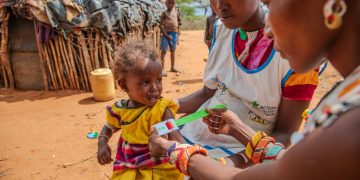
While in their overstretched clinics, nurses measure the upper arms of listless toddlers, the red band on the tape signaling severe acute malnutrition.
Experts are warning that after three consecutive below-averages rainy seasons, Kenya’s Arid and Semi-Arid Lands (ASAL) now face a deepening humanitarian crisis that aid agencies warn could spiral without urgent funding and coordinated action.
According to Dancliff Mbura, advocacy, communication and partnership coordinator at Action Against Hunger Kenya, The crisis will deepen without an immediate scale-up of resources, placing thousands of lives at risk of preventable death.
“An estimated 3.3 million people are facing acute food insecurity, with projections showing the number could rise to 3.6 million by June if assistance is not scaled up. More than 810,000 children under 5 and nearly 117,000 pregnant and breastfeeding women require urgent treatment for acute malnutrition.”
The October–December 2025 short rains delivered only 30percent to 60percent of normal rainfall among the driest seasons recorded since 1981 in parts of eastern Kenya. The failure followed poor rains in late 2024 and early 2025, reversing fragile recovery gains from the devastating 2021–2022 drought, when five consecutive rainy seasons failed.
Four counties Mandera County, Wajir County, Kwale County and Kilifi County are classified in the “Alarm” phase, indicating critical drought conditions. Twelve others, including Turkana County, Marsabit County, Isiolo County and Garissa County, are in the “Alert” phase and trending worse.
In many pastoral areas, up to 90percent of open water sources have dried up. Families report walking for hours and waiting up to six hours at crowded water points. The cost of a 20-liter jerrican has surged in some counties to as much as 100 Kenyan shillings, straining already depleted household incomes.
The drought’s economic toll is stark. Livestock central to pastoral livelihoods are dying in large numbers from starvation and disease. Marsabit County has recorded more than 50,000 sheep and goat deaths, while Mandera County has lost nearly 30,000 animals. Milk production in pastoral and agro-pastoral zones has dropped by about 55percent, and milk prices have more than doubled in some northern counties, depriving children of a key source of nutrition.
The report reveals that about half of severe acute malnutrition cases remain untreated because of funding shortfalls and gaps in outreach services.
Only 24 percent of mapped nutrition and health outreaches across ASAL counties are currently operational, limiting screening and treatment in hard-to-reach communities.
Poor water access has also fueled a rise in diarrheal diseases, respiratory infections and malaria illnesses that can quickly become deadly for malnourished children.
A coalition of humanitarian organizations, led by Action Against Hunger and local partners including the Catholic Diocese of Lodwar, Merti Integrated Development Programme, Nomadic Assistance for Peace and Development, Pastoralist Community Initiative and Development Assistance, Rural Agency for Community Development and Assistance, and Worthy Vision, is appealing for 24 billion Kenyan shillings (about $180 million) to mount an effective response.
The Kenya Food Security Steering Group estimates that the total drought response could cost up to 30 billion shillings. The government has so far released 6 billion shillings, leaving a substantial funding gap.
Aid agencies are urging a multisector approach expanding malnutrition screening and treatment, restoring mobile health outreach services, scaling up emergency water provision, supporting livestock through feed and veterinary care, and increasing cash transfers to help families purchase food.
They also warn of heightened protection risks for women and girls, including early marriage and gender-based violence, as families exhaust coping strategies.
For families across Kenya’s ASAL counties, the drought is measured in empty granaries, shrinking herds and children too weak to cry. Without swift and coordinated action, humanitarian groups say, the hunger crisis will intensify in the months ahead