

When Robert Kimotho Ngugi was growing up with spina bifida, he did not have a wheelchair.
His mother carried him on her back to and from school.
In class, he endured ridicule from other children who did not understand his condition. Using the toilet independently was a daily struggle. For years, he said, he did not even know why his body was different.
“I didn’t have anything like this,” Ngugi said, gesturing toward his sleek sports wheelchair. “Other children would laugh and ask why my mother carried me yet I was grown up. I felt alone.”
Today, Ngugi is a national wheelchair basketball player who has represented Kenya internationally.
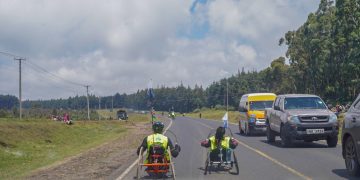
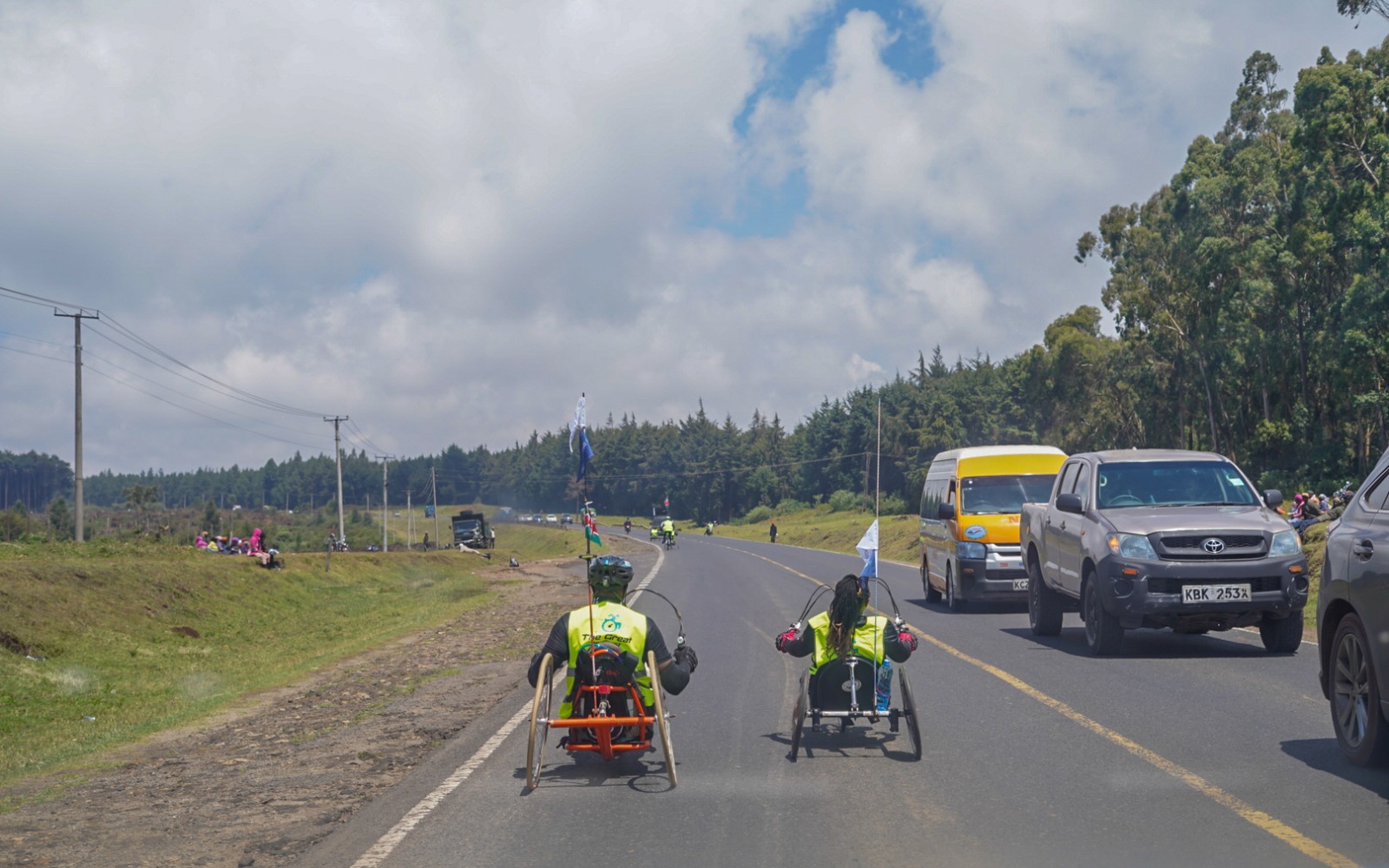
He has taken part in all three previous “Great Wheel” rides from Kijabe to Eldoret, Marsabit and Mombasa and is participating again this year as the campaign heads to Kakamega ahead of International Wheelchair Day on March 1.
He dedicates the journey to children growing up without assistive devices.
“When I joined Joytown Special School and met others like me, I realized I wasn’t alone,” he said. “Patience, perseverance and persistence those are the three things I tell children with disabilities. Don’t give up.”
Ngugi’s story reflects a broader national challenge, Kenya’s widening gap in access to wheelchairs and other mobility devices.
A deficit in the hundreds of thousands
Disability advocates and government officials estimate Kenya needs about 200,000 wheelchairs annually. Yet the National Council for Persons with Disabilities, the main public distributor, provided about 4,700 devices last financial year and is targeting 5,000 this year, with plans to scale toward 10,000 annually.
Dr. Michael Munene, chief executive officer of the National Council of People Living with Disability (NCPWD), acknowledged the shortfall.
“We are still running far below the numbers,” he said. “The needs far outnumber supply.”
He says that the deficit affects children born with mobility impairments, adults whose wheelchairs break down and people who acquire disabilities later in life often through traffic crashes or workplace injuries.
“We say we are all potential members of the disability fraternity,” Munene said. “Acquired disability is very common, especially from traffic accidents and other workplace injuries.”
‘A wheelchair is freedom’
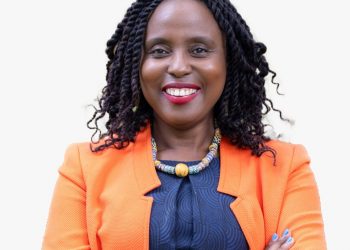
For Professor Lubna Mazrui, director of the Directorate of Disability Services at Kenyatta University, mobility is central to education and employment.
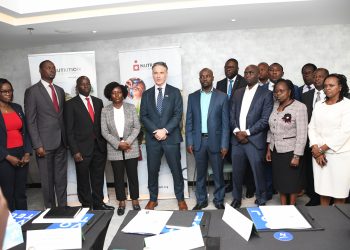
Speaking during the Great Wheel 2026 flag-off event organized by BethanyKids Kenya in partnership with NCPWD, Association for the Physically Disabled of Kenya, CURE Kenya, Kijabe Hospital, Motivation Charitable Trust, Christian Blind Mission and traffic police, Mazrui said assistive devices can transform lives.
“Wheelchairs allow a child with a disability to go to school, to perform well and eventually to get a job,” she said.
Mazrui supports students and staff with disabilities, helping ensure access to learning tools and independent living skills. But she said many children still lack even basic assistive devices.
“Without a wheelchair, a child’s life becomes much more difficult,” she said. “It can prevent them from moving forward.”
Citing global estimates from UNICEF, she noted that fewer than half of people who need assistive devices receive them, with the gap wider in low-resource settings.
“A wheelchair gives independence,” Mazrui said. “And independence gives hope.”
The ‘Great Wheel’ ride
The Kijabe-to-Kakamega journey, dubbed the “Great Wheel,” is now in its fourth year. What began as an initiative by an assistive technology team has grown into a cross-country advocacy campaign promoting appropriate wheelchair prescription and stronger local manufacturing.
David Nganga, country director of BethanyKids Kenya, said the campaign challenges a common misconception.
“There is a general assumption that a wheelchair is just a chair with wheels, and anyone who needs mobility support can use any wheelchair. That is not true,” he said.
A wheelchair, he emphasized, is a prescribed medical device that must match a user’s posture, condition and environment.
“It must serve the needs of the user and not cause injury,” Nganga said. “It must also be maintainable, with spare parts that can be sourced locally.”
The inaugural ride saw six wheelchair users propel themselves from Kijabe to Eldoret. The second year ended in Marsabit, the third in Mombasa. This year’s route concludes in Kakamega County, with celebrations planned at Bukungu Stadium on International Wheelchair Day.
The ‘Great Wheel 2026’ aim to raise 20 million Kenyan shillings to expand access to appropriate assistive devices. The funds will support a range of wheelchairs some manufactured locally, others imported for specialized needs.
Dr Munene pointed to the Association for the Physically Disabled of Kenya as a leading assembler of wheelchairs designed for Kenya’s rugged terrain.
While Nganga Country Director Bethany Kids says expanding domestic production, alongside public funding and partnerships, is key to closing the existing mobility gap.
Beyond charity
Organizers say the ride is about more than fundraising. It is about changing perceptions from viewing wheelchairs as charitable donations to recognizing them as essential health and mobility devices requiring assessment, customization and follow-up care.
For Ngugi, the impact is simple and personal.
“A wheelchair is freedom,” he said. “It changes everything.”