

By Ngumbo Njoroge
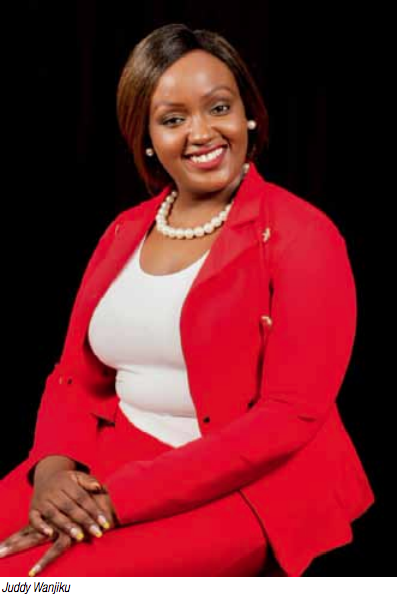
When Juddy Wanjiku walked into the Kenyatta National Hospital to seek treatment for her extreme period pains and heavy bleeding, she had just turned 18 and had lived in pain for four years.
In the four years that she visited the referral hospital to seek treatment, she was dismissed by health practitioners, telling her that it happened to everyone and that her excessive bleeding and period pain was a consequence of her sexual promiscuity.
Wanjiku started her period at thirteen, she was scared. “I remember they started while I was in school, but I kept it to myself and didn’t tell anyone. My mum never believed me. I was told it’s normal and everyone experienced it.”
She would buy painkillers and spend time sleeping in the school’s sick bay. When she had an asthma attack and was rushed to hospital, Wanjiku explained to the doctor that she was also in extreme pain. She says that a pain relieving injection was a ‘light bulb’. From then on she knew she could visit the health facility for an injection that relieved her pain. But she was still in school and could not afford it.
“I started saving, that meant I would walk to school, skip meals, I would go do house chores for my sister, she would pay me and I would keep the money and go get injection from the same doctor”. In school she would mask the period pain with asthma and everyone in her school thought it was asthma.
Spending time at home after high school, her parents began taking her seriously. She would sit with her dad and tell him that she was bleeding a lot and needed to go to hospital. That was the first time that her mother took her to Kenyatta. “I would go see gynaecologists who would give me medicine and I would go back home. I didn’t get any help. One gynaecologist told me that it happened to everyone and that mine was a bit serious.”
Her heavy bleeding persisted. In one of her regular checkups the doctor suggested a surgery to remove her uterus to ease her period pains, telling her mother that she could be promiscuous. “I remember that day the doctor was suggesting it’s an STI. She told my mum to go book for theatre to remove my uterus and I would be okay. That’s when it hit her that whatever I had was very serious.”
Being a Christian, Wajiku decided to go seek permission from her pastor to get a baby before she can have her uterus removed. Pastor Edward Odachi, then of Mamlaka Chapel, did not grant her request. Instead he recommended her to Dr Demetrius Mduda at Kijabe Mission Hospital who was a church member. At Kijabe, she had to start from scratch. “At that time it had gotten really bad.
I couldn’t walk, I would walk using a walking stick. I would bleed a lot and had lost a lot of weight.” Wanjiku says that is when she went to theatre and was diagnosed with endometriosis, beginning her journey as endo warrior and understanding the disease.
“I thought I was the only person who suffered from endometriosis. I went on Google to find out more about it. People never talked about it and one doctor told me that even in medical school they had like two sentences about it”.
According to Dr Alex Kaggia, in his research on endometriosis in Kenya, it is a chronic gynaecological condition that is poorly recognized in Kenya and characterized by pathological growth of endometrial tissue outside the uterus.