



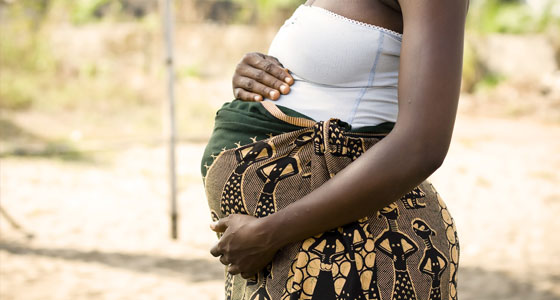
Expectant mothers should be told that the risk of placenta complications rises after a caesarean or fertility treatment, according to top doctors.
Royal College of Obstetricians and Gynaecologists (RCOG)guidelinessaid early diagnosis of conditions placenta praevia and placenta accreta was vital.
They added doctors should discuss with women the safest way to give birth.
The conditions can lead to heavy bleeding and sometimes put mother and baby’s lives at risk.
TV personality Kim Kardashian developed placenta accreta when pregnant with her daughter North West.
TV presenter Amanda Holden suffered from the rare placenta praevia-accreta when expecting her youngest daughter Hollie.
Placenta praevia happens when the placenta attaches in the lower part of the uterus (womb), sometimes completely covering the cervix (neck of the womb).
Placenta accreta is a rare but serious condition when the placenta is stuck to the muscle of the womb and/or to nearby structures such as the bladder.
Both conditions can cause heavy bleeding, particularly towards the end of the pregnancy, because the placenta is low down in the uterus.
This can sometimes require blood transfusions and lead to the loss of the uterus.
The RCOG has producedan online leaflet with informationfor women who may develop or have these conditions.
It says the rates of placenta praevia and placenta accreta have increased and are likely to continue to increase as a result of rising rates of caesarean births and the use of assisted reproductive technology, such as IVF.
This is because potential scars in the uterus created by caesareans and fertility treatment mean any subsequent pregnancies are more likely to implant in the scar, causing problems with the placenta.
The highest rates of complication for both mother and baby occur when these placenta complications are only diagnosed at delivery, the RCOG said.
And it encouraged more scans and specialised care to help reduce any risks.
-BBC