



By Glenna Nyamwaya
The Ministry of Health has assured radiology specialists of their safety at work as they handle equipment such as the ultra-modern tomography CAT scans.
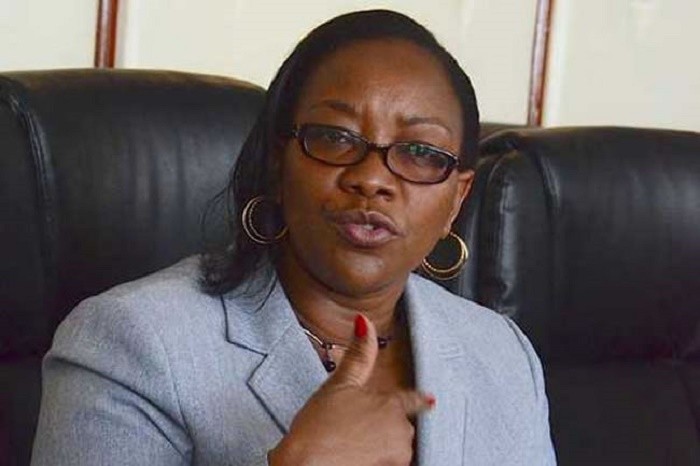
Health Cabinet Secretary Sicily Kariuki said the recently installed equipment is safe to use and would not expose experts to radiation.
“The safety and level of accuracy of these equipment in terms of diagnostics and subsequent treatment is better than what we had before,” she said.
The government is currently in the process of installing 37 CAT scans in public health facilities across 16 counties to aid in the diagnosis of various ailments.
However, there have been concerns raised by radiology specialists concerning their safety when handling the machines, with calls for the government to protect their health.
Ionising radiation has sufficient energy to affect the atoms in living cells and damage their genetic material (DNA).
Fortunately, body cells are efficient in repairing this damage, but if the damage is not repaired correctly, a cell may die or eventually become cancerous.
Health Principal Secretary Peter Tum further assured experts that the new machines have sophisticated gadgets that can measure the level of radiation in the patient, and that of the medical practitioner.
The Thermoluminescent Dosimeter (TLD) installed in the new machines is a type of radiation dosimeter that measures ionising radiation exposure by measuring the intensity of visible light emitted by a crystal inside the detector when it is heated.
These dosimeters will monitor radiation levels for the healthcare workers, and assess background and environmental radiation leakage within the radiology departments.
TLDs are wearable devises that measure ionising radiation exposure levels from radiation-emitting devices like general X-ray units and CT scanners.
“Uncontrolled doses of radiation pose a great risk to patients and those operating the machines. This is why we had to ensure that the machines come with an automated solution to monitor every employee,” Tum said.
He confirmed that the gadget also ensures no leakage of radiation from the radiology rooms thus not endangering those working in adjacent rooms or those passing near the facility.
The Ministry of Health is working in collaboration with the government of China to launch CT scan units for 37 county hospitals.
In installing the units, the government placed emphasis on hospitals located along major highways with a view to enhancing fast and accurate diagnostics on victims of emergency cases such as road accidents.
Under the initiative, the government has contracted Neusoft Medical Systems, a Chinese medical equipment manufacturing company, and Megascope Healthcare, who are their local partners, under a government to government collaboration with China.
This collaboration saw Megascope Healthcare in conjunction with specialists from China and Europe train about 50 radiographers and radiologists in a mentorship course on the use of the machines.
The course covered several areas including basic operations, patient positioning, image acquisition, post-processing, and image archiving and filming.
CS Kariuki said the ministry was also putting up a centre of excellence and a cloud imaging centre at Kenyatta National Hospital (KNH).
“This means patients accessing these services can actually wait for their results real time since it connects to all county CT scanners for reporting second opinion, teaching and referrals,” she said.
Radiographers however blame the government for being quiet about the safety of those who will operate the machines.
Accoding to the Radiation Protection Act, standards of radiation protection should be observed for the safety of the patients and persons operating the machine.
Advances in X-ray technology and medical imaging systems have increased exposure to radiation through CAT scans and the growing complexity of the procedures.
Excessive radiation is passed on to patients due to unnecessary and repeated X-rays as a result of poor and refurbished imaging equipment.
The PS however added that the data on the effects of radiation on health workers might not be easily available in public hospitals.
So far, the government has installed fully functional CT centres at the Thika Level Five Hospital, Iten County Referral Hospital in Elgeyo Marakwet County, Kakamega County Referral Hospital, Narok County Referral Hospital and Voi Level Five Hospital in Taita- Taveta County.
The use of radiation in medicine enables earlier diagnosis and often offers less invasive treatments of human diseases.
According to the National Hospital Insurance Fund’s (NHIF) annual report, CT scan services were ranked number 12 in terms of its health expenditure during the financial years 2016-17 and 2017-18, at Sh 285,069,617 and Sh 311,512,561 respectively.
“This is an indication of a need for this crucial service. With the increasing burden of cancer and road accidents, these machines will greatly transform operations in public health facilities and help the local population,” PS Tum said.
NHIF covers MRIs up to a maximum of Sh15,000 per session while payments for CT-scans are capped at Sh8,000.
Meanwhile, the World Health Organisation is conducting a Global Initiative on Radiation Safety in Healthcare Settings to mobilise the health sector towards safe and effective use of radiation in medicine.
“By integrating radiation protection into the concepts of good medical practice and healthcare service quality, this initiative provides a platform for collaboration to improve the implementation of radiation safety standards in healthcare settings,” the agency states.
According to WHO, more than 3,600 million diagnostic radiology examinations are performed globally annually.
“While the development of modern health technology makes new applications safer, inappropriate use may result in unnecessary and preventable radiation risks,” said the global health agency.
WHO further suggests a balanced approach that recognises the multiple health benefits that can be obtained while assuring that risks are minimised.