




T.B stakeholders are sounding alarm over critical funding shortfalls that may jeopardize efforts to meet TB elimination target set by 2035.
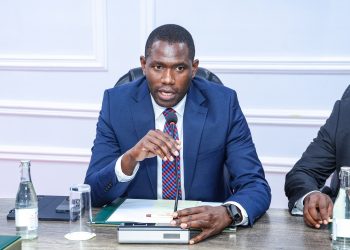
Speaking at the Second Kenya National TB Champions Summit in Nairobi, Dr. Lucica Ditiu, Executive Director of the Stop TB Partnership, said that there is an urgent need for increased financial support to expand TB prevention, diagnosis, and treatment.
“There is a huge need for TB financing to diagnose tuberculosis and initiate preventive treatment. We still have a long way to go given that TB remains a significant airborne disease affecting millions globally,” Dr. Ditiu said.
She urged international donors, technical support agencies, and governments to step up funding allocations for TB programs saying that despite TB surpassing HIV as the highest infectious killer, funding distribution paints a stark picture with HIV receiving 50percent, malaria 32percent and TB a mere 18percent of total international health funding.
Dr. Ditiu, lauded Kenya’s efforts in mobilizing TB champions all over the country but expressed disappointment over the absence of high-level government representation.
“Government commitment is crucial in tackling the TB burden effectively,” she remarked, underlining the need for unified national efforts adding that,” “It is amazing how Kenya has shown unique TB approach by engaging TB leadership, TB champions and civil society through largest ever convening of TB champions by organizing a national TB summit bringing together more than 200 people in a room from the entire country to discuss TB as TB champions which is important and unique and Kenya need to be taken as an example.”
She explained that in Kenya alone, approximately 30,000 TB cases are reported annually but only close to 70 percent are diagnosed and treated while those with drug-resistant TB (DR-TB) are estimated to be 1500 in Kenya but only about 900 that is 2 in about 5 people accessed diagnosis and treatment.
Ditiu observed that despite promising developments in new TB vaccines and treatments, their progress remains hampered by insufficient investment. She raised her doubts about meeting the financial requirements of $1 billion annually for the next three years required to ensure timely rollout of new TB vaccines by 2030.
She further explained that, “we have Six of new TB vaccines candidates in the pipeline considered critical for eliminating TB, yet while promising candidates exist, such as the M72/ASO1E candidate vaccine funded by Gates foundation and Welcome Trust the other five candidates faces limited financing and market incentives which may delay their development.”
The current TB vaccine, BCG, though effective in newborns, falls short in older age groups, highlighting the urgent need for new, more effective vaccines.
Dr. Ditiu stressed the importance of complementary vaccines that can combat drug-resistant strains and reduce TB transmission across all demographics.
The Stop TB Partnership, headquartered in Geneva and hosted by the United Nations, serves as a global catalyst for TB eradication, engaging over 2,000 partners worldwide in collaborative efforts. According to the World Health Organization (WHO), TB remains a disease predominantly affecting developing countries, with 1.3 million new cases reported annually.
According Evalyne Kibuchi, Chief Coordinator Stop TB partnerships-Kenya, called for government to declare TB a national disaster for it to get the focus HIV have been getting even in terms of funding.
“TB is Killing more people than HIV and I am longing for a day President William Ruto will declare that we are losing more people to a treatable disease and he is taking leadership to address this problem,” Kibuchi said.
She explained that Tuberculosis (TB) stands as a prominent cause of death from a single infectious agents topping the list of infectious diseases with the highest mortality rate and has overtaken HIV, it is now the leading cause of death from infection in Kenya.
She also emphasized the need to engage communities saying that empowered communities play important role in ending TB.