

Faith and Community leaders call for Global Action to Sustain Fight Against HIV, TB, and Malaria urging governments, donors countries and private sector to step up their commitment to fully fund eighth Replenishment of Global Fund and stronger national Investment in health.
In a joint statement read in Nairobi, the leaders underscored the vital role the Global Fund plays in saving millions of lives and strengthening health systems in the world’s most vulnerable regions.
The delegation — which included participants from Bolivia, Cote d’Ivoire, the Democratic Republic of Congo, Kenya, Malawi, Nigeria, Tanzania, the Netherlands, Togo, South Africa, Uganda, Zambia, and Zimbabwe — highlighted the grave risk to global health if political will and financial commitment wane.
“We recognize the critical role of the Global Fund to fight AIDS, Tuberculosis and Malaria,” said Canon Gideon Byamugisha, co-founder of the International Network of Religious Leaders Living With HIV, Uganda. “It creates space for the affected communities, promotes transparency, and allows for multi-stakeholder dialogue. The eighth replenishment investment is clear on what it will deliver — save 23 million additional lives and prevent 400 million new infections. This is capable of returning $19 for every $1 invested and reducing the combined death toll from 2.3 million in 2023 to 920,000 by 2029.”
The call to action comes as the Global Fund seeks to raise $18 billion to finance programs during the 2026–2028 period. The replenishment, leaders said, is not only a health intervention but a moral and economic necessity.
Rev. Godson Dogbeda Teyi Lawson, Presiding Bishop of the Methodist Church in Togo, emphasized the gravity of the current health landscape, citing data from UNAIDS and the World Health Organization. “In 2023 alone, we saw 1.3 million new HIV infections and 630,000 AIDS-related deaths. There were 255 million malaria cases and 630,000 deaths — 75 percent among children under five. TB infected over 10 million people, claiming 1.25 million lives,” he said. “These aren’t just statistics. They represent human life. The world must not look away.”
Leaders warned that if the replenishment target is not met, progress made in combating the three diseases over the past two decades could be reversed, leaving millions at risk and widening already stark health inequalities.
Nelson Otwoma, Director of the Network of People Living with HIV in Kenya (NEPHAK), spoke to the socio-economic impact of the diseases. “When we get sick, our families, economies, and nations suffer. We are the backbone of our communities — workers, taxpayers, mothers, fathers, and young people shaping our continent’s future. The right to health is enshrined in our constitutions and in our faith. Investing in the health of our communities is an investment in the stability, prosperity, and social fabric of our countries.”
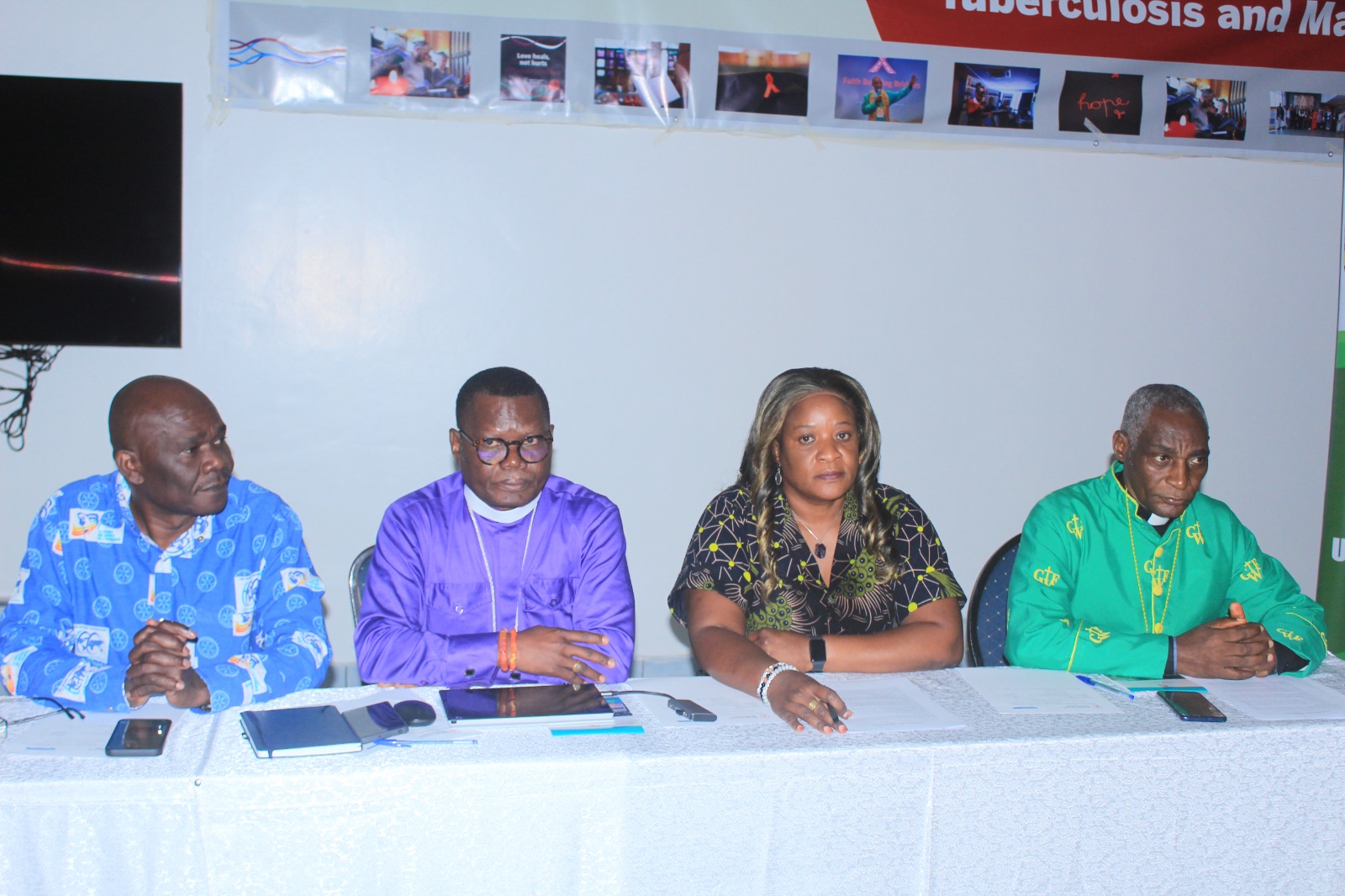
The gathering, which was also supported by the World Council of Churches (WCC), served as a platform for faith and community actors to evaluate global developments affecting the HIV, TB, and malaria response, and to coordinate advocacy to ensure no one is left behind — especially as some major international donors reduce their support.
Charity Mkona, Board Chairperson of the International Steering Committee of the International Community of Women Living With HIV, Malawi, urged renewed commitment from all stakeholders. “Governments, donors, and the private sector must step up. Only in this way can we continue to honor the value of each life and advance well-being for all,” she said.
The Nairobi statement closed with a collective plea:
“We ask donors to urgently commit to fully fund the eighth replenishment of the Global Fund to fight AIDS, Tuberculosis and Malaria. We urge continued efforts to close equity gaps, to give hope, and to defend the sanctity of life.”
The voices from Nairobi serve as a reminder that global solidarity and shared responsibility are key to defeating preventable diseases — and to affirming the inherent worth of every life.