


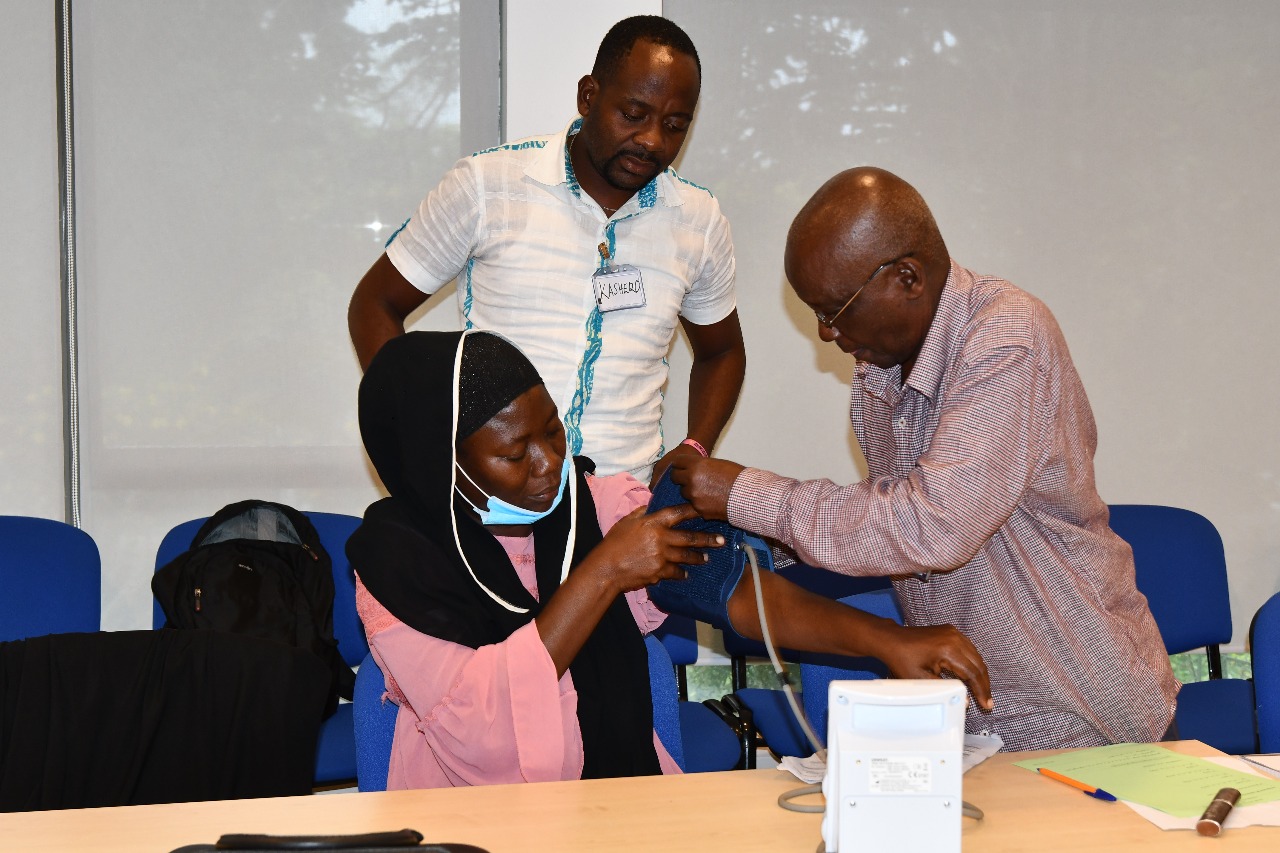
Deep in the villages of Chasimba and Matsangoni in Kilifi County, a quiet healthcare revolution is taking shape. Local community health promoters (CHPs), equipped with digital blood pressure monitors that fit neatly in their palms, are emerging as the first line of defense against one of Africa’s deadliest but most silent killers’ hypertension.
This effort is part of the Improving Hypertension Control in Rural Sub-Saharan Africa (IHCOR-Africa) project, a collaborative study conducted in partnership with the KEMRI-Wellcome Trust Research Programme in Kenya and researchers at the London School of Hygiene and Tropical Medicine and the Medical Research Council unit at The Gambia.
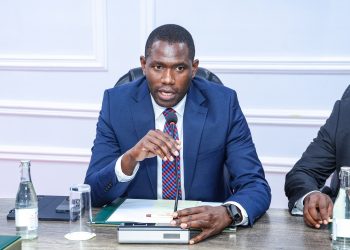
According to Catherine Kalu, a project coordinator with KEMRI-Wellcome Trust, the initiative aims to transform how hypertension is detected and managed by bringing screening and treatment closer to the people most at risk living in remote villages.
“Hypertension doesn’t show symptoms. People don’t go to hospitals just to check their blood pressure,” she explains. “By the time they feel unwell enough to visit a facility, much of the damage has already been done.”
She added that unlike most research initiatives that depend on clinical staff, the IHCOR-Africa study has placed its trust in CHPs who are trained to identify and record blood pressure readings in their neighborhoods.
According to Kalu, each CHP underwent a ten-day intensive training programme covering consenting, communication skills and the correct technique for taking blood pressure. They were equipped with digital monitors, each validated against a 24-hour ambulatory device, the gold standard for accuracy.
Kalu says the approach reflects a deliberate shift in Kenya’s health system toward primary healthcare and community-level disease management. The goal, she explains, is to ensure that hypertension is identified and managed where people live, not just in hospitals. For decades, hypertension and other lifestyle-related diseases were viewed as urban problems, but that perception is changing.
“There’s a noticeable rise in hypertension even in rural areas and among younger people, sometimes as early as their thirties,” she says adding that, “In towns, people visit hospitals more often, so screening happens opportunistically. But in rural areas, people only go to hospitals when they’re already very sick.”
She explains that the study sites in Chasimba and Matsangoni were selected after consultations with local communities, who wanted to take part so the research could directly benefit their populations. Once CHPs identify individuals with elevated blood pressure, they refer them to nearby clinics for confirmatory tests and further assessment of the damage that uncontrolled hypertension can cause to vital organs such as the heart, kidneys and eyes.
Kalu said that “IHCOR-Africa project is testing new ground.” Adding that, “Instead of relying on large, hospital-based equipment, the study is evaluating portable diagnostic devices that can perform electrocardiograms, urinalysis and blood tests within minutes.”
She explained that one of the diagnostic tools a six-lead ECG device barely the size of a credit card can be placed on the knee or ankle to record a patient’s heart activity. “It’s small, efficient and gives instant results,” says Kalu. “We’re testing whether such tools can work just as well at primary-care level as the standard hospital machines.”
Participants diagnosed with hypertension are classified into three groups. Those with normal readings receive advice on lifestyle. Those with elevated readings but no organ damage are counselled on diet and exercise. Those with confirmed hypertension and organ damage are started on treatment immediately in addition to the lifestyle advice.
To improve medication adherence, she says that the study is piloting a simple treatment of one pill that contains two medicines for treating high blood pressure (Fixed Dose Combination) that simplifies treatment and increases compliance. The drugs are provided free of charge during the study period.
“Since hypertension is a lifelong condition, we’re ensuring patients continue receiving medication for six months even after the study ends,” Kalu says. “By then, we hope the Ministry of Health will have integrated the same drugs into the regular supply chain.”
Beyond improving individual outcomes, the IHCOR-Africa project could influence future health policy in Kenya and across Africa. The findings are expected to provide evidence on the cost-effectiveness of deploying portable diagnostic devices to lower-level health facilities and on the value of training CHPs to detect hypertension early.
“These devices are not cheap,” Kalu admits, “but compared to the cost of advanced hospital equipment and the benefits of early detection they’re absolutely worth it.”
Already, the Ministry of Health has begun using CHPs to take blood pressure measurements in some areas, and the project’s results could strengthen that strategy and accelerate the integration of point-of-care technologies into national health systems.
Early results, Kalu says, are promising showing that empowering CHPs can greatly enhance early detection and management of hypertension in rural settings.
“We’re proving that with the right training and tools, community health promoters can make a real difference,” she says. “If we can control hypertension at the village level, we can prevent heart disease, kidney failure and strokes before they happen.”
The IHCOR study forms part of a broader regional collaboration under the Improving Hypertension Control in Rural Sub-Saharan Africa (IHCoR-Africa) initiative, led by co-principal investigators Dr Pablo Perel of the London School of Hygiene & Tropical Medicine and Dr Anthony Etyang of KEMRI-Wellcome Trust.
The IHCOR-Africa project brings together partners from Kenya, The Gambia and the United Kingdom, with the goal of strengthening research and improving hypertension management across the continent.
The study objectives are to understand barriers to detection and treatment, identify optimal diagnostic and risk assessment methods, and develop a community-centered programme for improving care. The study involves 1,250 participants across the two countries and will help determine the accuracy of community-based blood pressure measurements, the prevalence of hypertension-related organ damage and the cost-effectiveness of different strategies for managing the disease.
As data cleaning wraps up and publications move forward, optimism is high. The early findings are pointing toward a sustainable model for hypertension control in resource-limited settings.
For Kenya and for Africa the study represents more than just another research project. It marks a shift in how healthcare is delivered, bringing prevention to the doorsteps of the people who need it most.
“This is about transforming how we think about healthcare,” says Kalu. “We’re moving from waiting for illness to preventing it right where people live.”