


The recent withdrawal of United States government funding has opened a major financing gap in Kenya’s health sector, threatening healthcare delivery and exposing the country’s deep reliance on external aid, a new report warns.
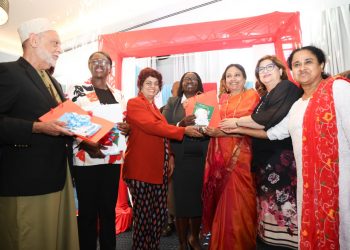
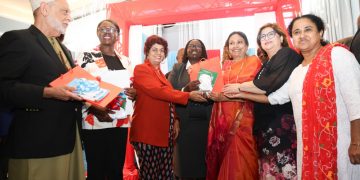
The report, Immediate Impact of External Funding Withdrawal on Kenya’s Health Sector, by the Centre for Epidemiological Modelling and Analysis (CEMA) at the University of Nairobi, provides a comprehensive mapping of external health financing and traces how donor funds flow through Kenya’s health system. It identifies the programmes, populations, and system components most vulnerable to the sudden funding shock.
Kenya’s health system is financed through a mix of government allocations, private sector spending, and external support. In the 2018/19 financial year, external funders accounted for 18 percent of total health expenditure, with the US government providing more than 60 percent of all external health financing—making it by far the single largest donor to the sector.
To produce the analysis, the authors drew on Ministry of Health–approved budgets, commodity quantification reports, human resources for health (HRH) budgets, donor annual reports, and operational and grant documents from development partners. The assessment focused on service disruptions, equity in access to care, workforce implications, and impacts on the commodity supply chain and health infrastructure.
The findings reveal a steep and immediate contraction in available resources. External funding for health fell from KES 126 billion to KES 54 billion in the 2025/26 financial year, driven largely by the withdrawal of US government support and a simultaneous decline in government allocations.
In 2025/26, reproductive, maternal, neonatal, and child health (RMNCH) emerged as the most externally funded programme, receiving KES 5.85 billion—up from KES 1.04 billion the previous year. However, government financing for RMNCH declined sharply over the same period, from KES 1.04 billion in 2024/25 to KES 0.54 billion in 2025/26, pointing to a potential crowding-out effect where external resources substitute rather than supplement domestic investment.
Funding for HIV, tuberculosis, and malaria—long the backbone of donor-supported health programming—has declined across both external and government sources. Global Fund support for tuberculosis dropped from KES 4 billion in 2024/25 to KES 1.74 billion in 2025/26. Malaria funding fell even more sharply, from KES 4.25 billion to KES 1.53 billion. Government and Global Fund allocations for HIV also declined in the same financial year.
The contraction in financing has widened the commodity funding gap to KES 34.655 billion in 2025/26, raising the risk of stock-outs of essential medicines and diagnostics. Human resources are also at risk: counties would require an estimated KES 47.8 billion annually to absorb the 41,170 staff currently supported by the US President’s Emergency Plan for AIDS Relief (PEPFAR), most of whom work in high HIV-burden counties.
The report further warns that Kenya’s health information systems—critical for collecting, analysing, and disseminating health data—are highly dependent on external funding, making them particularly vulnerable to donor withdrawal.
Vulnerable populations are expected to bear the greatest burden. Pregnant women, children, adolescents, and adolescent girls and young women (AGYW) are likely to face disproportionate disruptions in access to HIV prevention, treatment, and other essential health services, potentially widening existing inequities.
The effects may extend beyond bilateral aid. Multilateral institutions such as the Global Fund, World Bank, World Health Organization, and GAVI all receive substantial funding from the US government. Reductions in their global budgets could force a reprioritisation of interventions in Kenya, further tightening the resource envelope.
Despite the risks, the report argues that the funding shock presents a pivotal opportunity for reform. It calls for Kenya to reset its health financing model and build a more self-reliant and resilient system.
“External funding has long played a significant role in Kenya’s health sector, but it is unpredictable and unsustainable,” said Dr. David Khaoya, Lead Author and Senior Research Fellow at CEMA.
“This funding shock is a wake-up call. While the challenges are significant, Kenya—and other African countries—now have an opportunity to rethink how health systems are financed and to build long-term resilience,” he added.
According to the report, increasing domestic investment, strengthening national ownership, and reducing overreliance on external aid will be critical to safeguarding health outcomes in the years ahead.
A long-term impact analysis of the funding withdrawal is currently underway and is expected to be released in due course.